
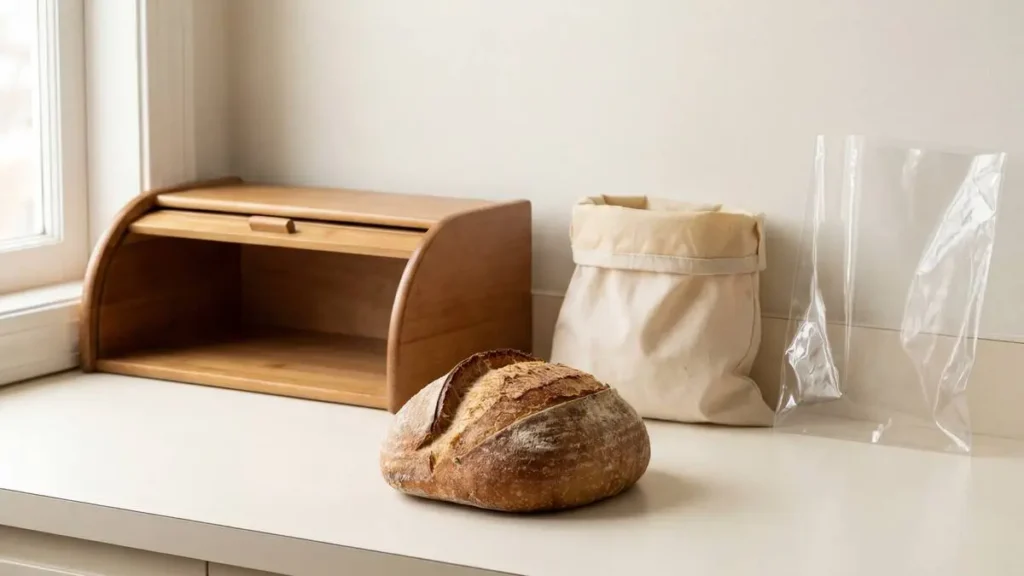
You just baked a loaf, or carried one home still warm, and now it’s sitting on the counter while you decide where it goes. Bread box? Cloth bag? The plastic sleeve it came in? It feels like a small choice. It isn’t. Where you put that loaf changes how it ages, sometimes by the next morning.
Here’s how the three most common options really compare.
Do Bread Boxes Work Better Than Bread Bags?
Both work, but for different breads. A bread box shields a loaf from light and air while still letting it breathe, which suits everyday bread you’ll finish quickly. A breathable bread bag sits closer to the loaf and helps balance moisture, making it a better match for crust-forward bread like sourdough. Sealed plastic traps moisture and softens the crust faster than either.
How Each Method Handles Your Bread
Storage isn’t really about the container. It’s about what the container does to the air around your bread. Three things decide how a loaf ages: how fast moisture escapes, how much gets trapped, and whether enough air moves to keep mold from settling in. Each method strikes that balance differently.
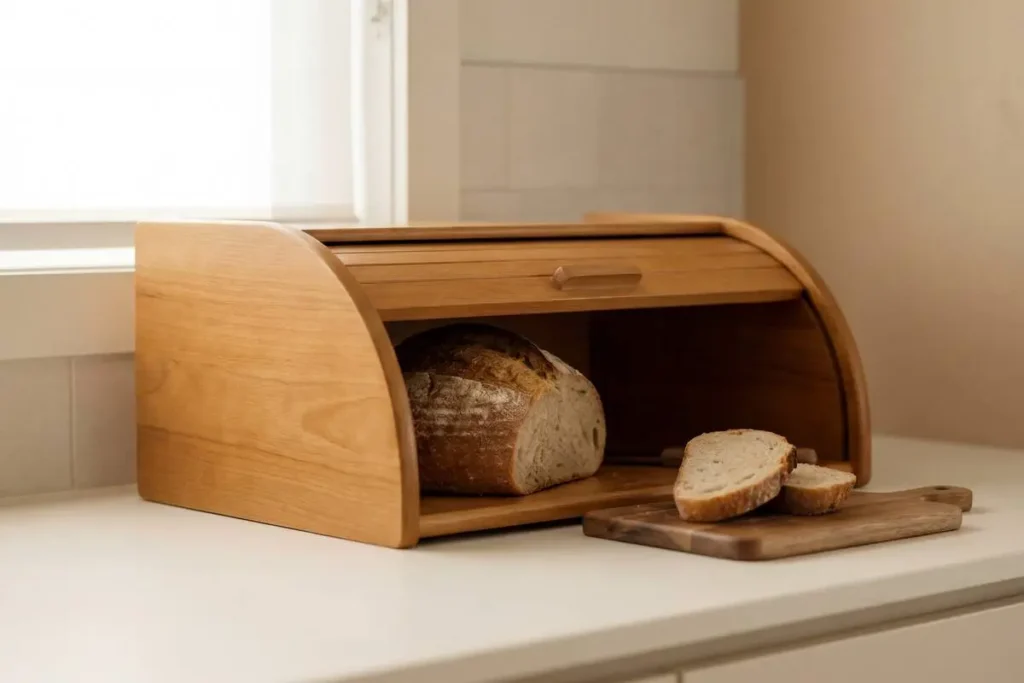
A bread box is a closed container, usually wood, metal, or bamboo, with a lid or roll-top that doesn’t seal tight. It blocks light and slows the air moving past the loaf, so the crust hardens more slowly than it would out in the open. The weakness is space. A roomy box with one small loaf inside has a lot of empty air, and that air still pulls moisture from the crust over time. A box shelters bread and lets it breathe, but it doesn’t do much to actively manage humidity.
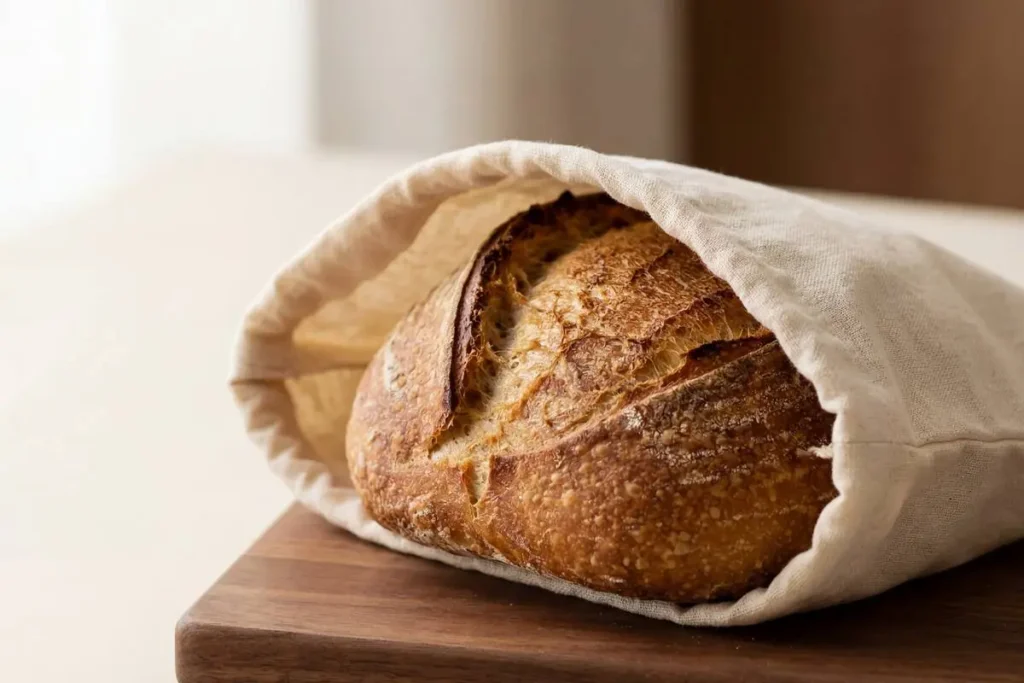
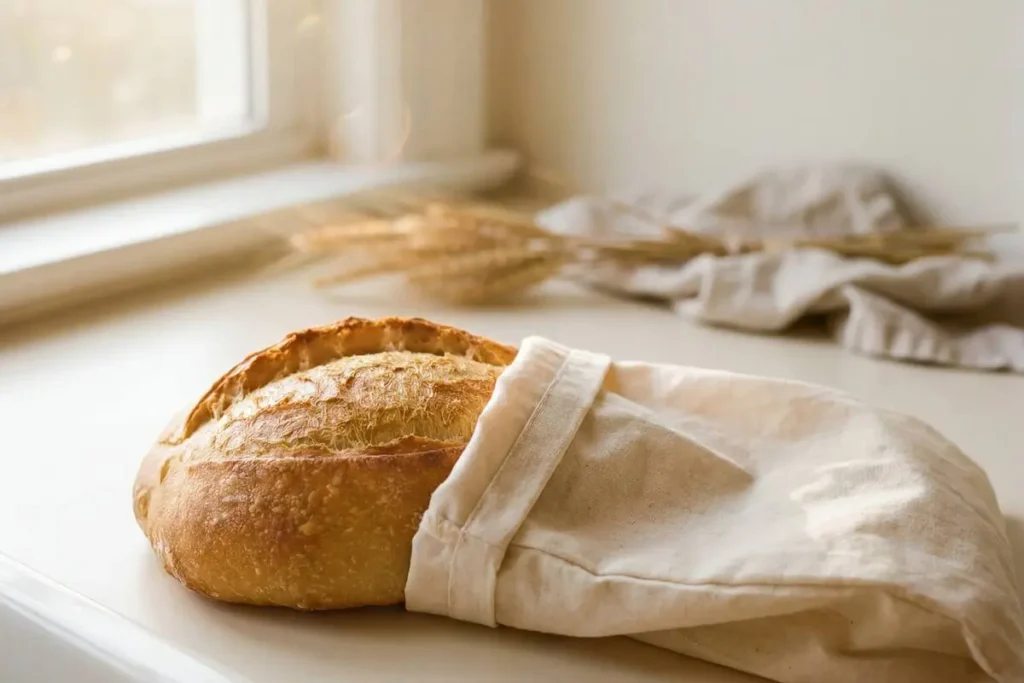
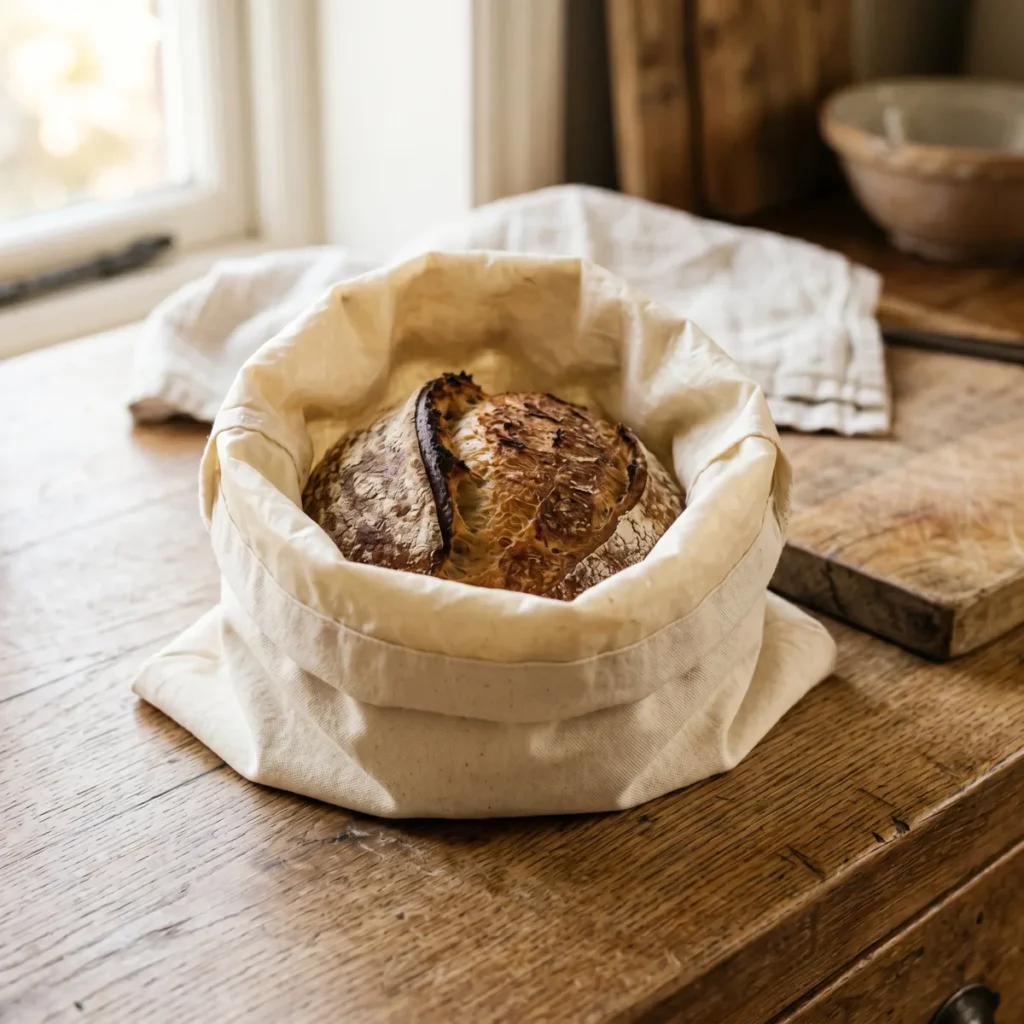
A bread bag works differently because it sits much closer to the loaf. Breathable cloth or beeswax-lined cotton lets air move in a controlled way while slowing rapid moisture loss, which helps the crust hold its texture without sealing humidity in. Plain linen breathes more freely and can dry a loaf out faster in a low-humidity kitchen. A beeswax-based lining slows that loss a little more. The trade-off is capacity: a bag handles one or two loaves, not a counter’s worth of baked goods.
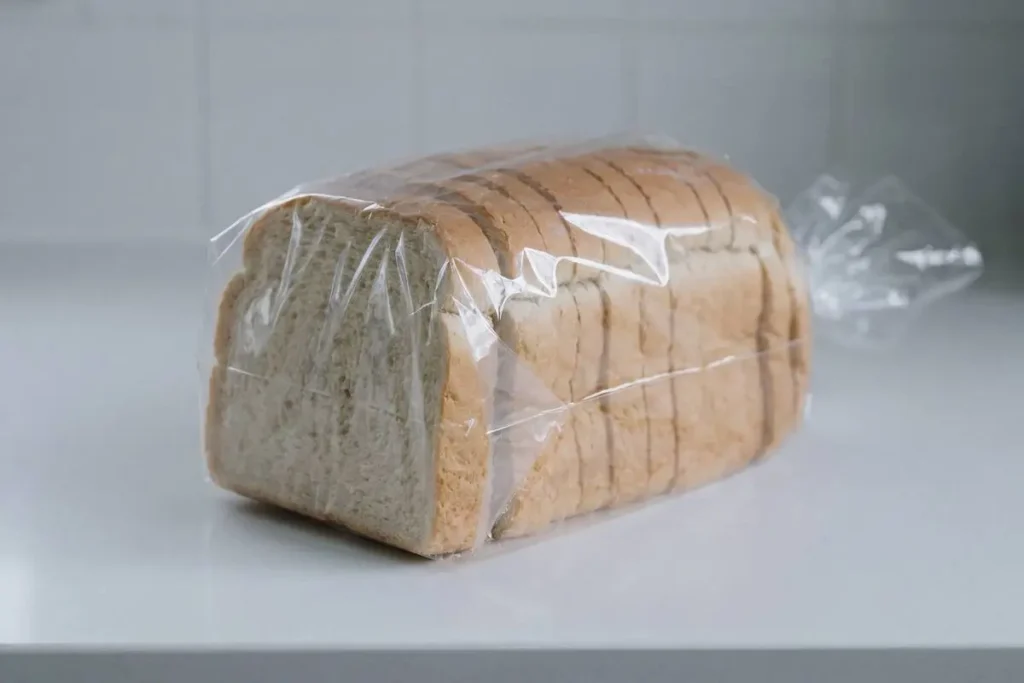
Sealed plastic does the opposite of a box. Instead of letting air move, it holds it in. The moisture evaporating from the crumb has nowhere to go, so it settles back onto the crust, which is why bread in plastic often turns soft, sometimes even damp, by the next day. That’s fine for a soft sandwich loaf. For anything with a real crust, it usually works against you. Poking a few holes helps a bit, but it’s a patch, not a real fix.
The shorthand is easy to remember: boxes shelter, bags balance, plastic traps. Which one is “best” comes down to the bread you bake and how fast you eat it. One habit helps no matter what you choose: let the loaf cool completely before you put it away. Trapping warm steam too early softens the crust and adds moisture you don’t want.
For the wider picture across every bread type, our guide on how to keep bread fresh covers the full set of methods.
When a Bread Box Makes Sense
A bread box earns its spot if you bake or buy bread often, keep it on the counter, and want one neat home for it. It’s at its best with everyday loaves you’ll get through in a couple of days: sandwich bread, soft rolls, a half-eaten boule. By keeping light and drafts off the loaf, it slows the crust from going hard in open air. The thing to watch is humidity. In a warm, humid kitchen, a closed box with little airflow can let moisture build up, which is the usual reason bread molds inside one. A box with vents or a loose lid handles that far better than a tightly sealed one. Reach for a box when convenience and a tidy counter matter more than precise crust control.
When a Bread Bag Makes Sense
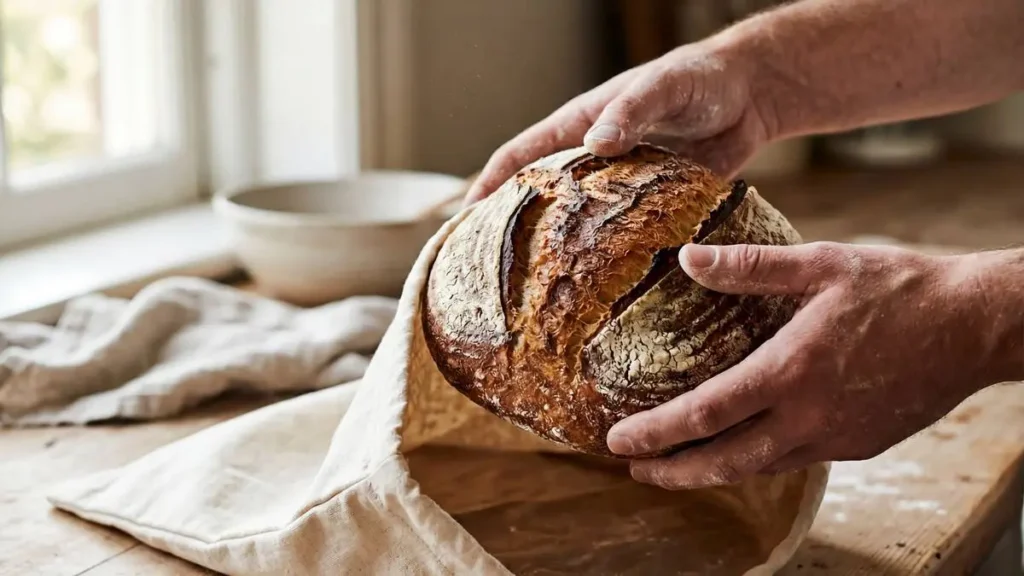
A bread bag makes sense when crust is the thing you care about and you’re storing a loaf or two at a time. For sourdough and other crust-forward breads, a breathable bag stays close enough to slow moisture loss without trapping it, which is tighter control than a roomy box gives you. It’s also the more flexible option. It folds away when it’s empty, travels well, and doesn’t claim permanent counter space. If sourdough is your usual bake, the trade-offs shift a little, and our guide on how to store sourdough bread digs into why breathability matters so much for those loaves. Choose a bag when texture matters and you’re storing one loaf at a time, not a batch.
When Plastic Is (and Isn’t) Worth It
Plastic has one genuine strength: it keeps soft, pre-sliced sandwich bread from drying out, because that bread has no crust to protect and actually benefits from a bit of trapped moisture. For everyday store-bought loaves you’ll finish in a few days, it’s perfectly fine. The problem is homemade, crust-forward bread. There, the trapped moisture softens the crust and can bring on mold sooner in a warm kitchen. If you bake your own, plastic is usually the habit worth breaking. Our guide on how to store homemade bread runs through better options for loaves you’ve made yourself.
Why Bread Goes Stale No Matter the Container
Whatever you store bread in, it goes stale through two things happening at the same time, and understanding them explains why the container matters at all.
The first is moisture moving around. A fresh loaf holds water in its crumb. Out in the open, that water evaporates and the crust hardens. Sealed in plastic, it can’t escape, so it travels from the crumb to the crust instead, leaving the outside soft and the inside drier than you’d like. A breathable container lands between those two extremes: it slows evaporation without trapping humidity. That balance is the whole game.
The second is starch retrogradation — the molecular reason bread firms up even when it hasn’t dried out. After baking, the starch molecules slowly recrystallize, stiffening the crumb and flattening the texture. This happens no matter how you store the loaf, and it actually speeds up at fridge temperatures, which is why refrigerated bread often tastes stale faster than bread left on the counter.
Here’s the part worth holding onto: no container stops bread from staling. A box, a bag, and a plastic sleeve are all just different ways of managing the moisture side of it. The right one is whichever balances airflow for the kind of bread you actually bake. Breathable materials like beeswax-lined cotton work by letting some air move while slowing rapid moisture loss, not sealing the loaf, not leaving it exposed.
So Which Should You Choose?
If you want one tidy spot on the counter for several everyday loaves, a ventilated bread box is the practical pick. If you bake one or two crust-forward loaves at a time and care how the crust holds up, a breathable bread bag gives you closer control. And if your bread is soft, sliced, and store-bought, plastic still does the job. It’s just the weakest option for homemade or sourdough-style loaves.
Where Beeswax-Lined Bags Fit In
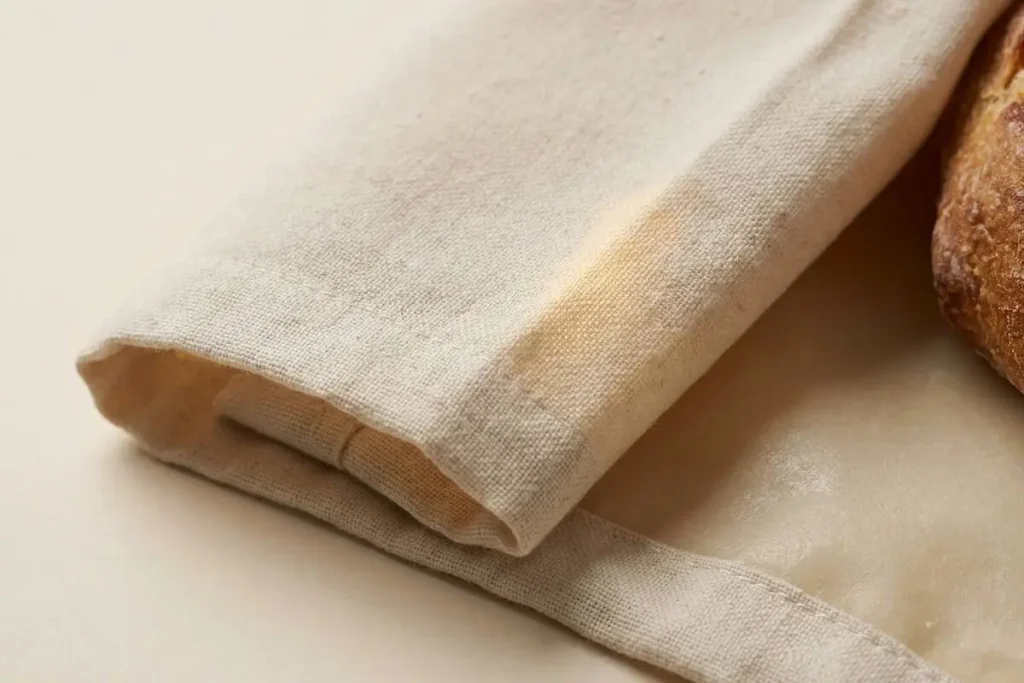
Among bread bags, beeswax-lined cotton sits at the more considered end of the shelf. The idea behind it is simple: cotton gives you a breathable base, and a beeswax-based coating slows rapid moisture loss while still letting some air through. That keeps the bag closer to the balance point than a roomy box or a plain linen bag, slowing the crust from hardening without trapping humidity the way plastic does.
It behaves differently from an uncoated cloth bag, which breathes more freely and can dry a loaf out faster in a dry kitchen, and from sealed plastic, which holds moisture against the crust. The beeswax-based lining adds a light protective layer that holds up to repeated use with gentle care, so it’s a long-term piece of kitchen kit rather than something you toss after a week.
The TALORNE set includes two XL beeswax-lined bread bags: one Wheat Stalk and one Bread Sketch, each approximately 17 × 13 inches laid flat. Allow room for the loaf and roll-top closure. Now available on Amazon US. View current pricing and delivery options on Amazon.
To see how beeswax-lined bags stack up against other storage methods in more detail, read our full guide on beeswax bread bags.
Do bread boxes actually keep bread fresh?
A bread box helps by keeping light and moving air off the loaf, which slows the crust from hardening in the open. It works best for everyday bread you’ll finish within a couple of days. What it doesn’t do is actively manage humidity, so in a warm or humid kitchen a box with poor airflow can let moisture build up. Picking one with vents or a loose-fitting lid makes a real difference.
Is a bread bag better than a bread box for sourdough?
For sourdough, a breathable bread bag usually has the edge. It sits closer to the loaf and helps balance moisture and airflow without trapping humidity, while a bread box leaves more empty air around a single loaf that can pull moisture from the crust over time. If crust texture is your priority, a bag gives you tighter control. A box is more about convenience and keeping several things in one place.
Why does bread in a plastic bag get soft?
Sealed plastic traps the moisture evaporating from the crumb. With nowhere to escape, it settles back onto the crust, softening it and sometimes leaving it damp. That’s fine for soft sandwich bread, which has no crust to protect, but it works against crust-forward breads like sourdough. Breathable storage lets that vapor drift out slowly, which helps the crust keep its bite.
Can a bread box cause mold?
A bread box doesn’t cause mold by itself, but a closed box in a warm, humid kitchen can create the conditions where it shows up sooner, since trapped humidity and weak airflow favor spores. Letting bread cool fully before storing, choosing a box with some ventilation, and not overpacking it all help. For more on managing moisture, see our guide on how to keep bread fresh.
What’s the best way to store homemade bread without a bread box?
If you bake your own and don’t want a box on the counter, a breathable bag is usually the easiest upgrade over plastic. It stays close to the loaf, helps balance moisture, and folds away when you’re not using it. Keep the loaf cut-side down on a board for short stretches, and freeze any portions you won’t get to within a few days. Our homemade bread storage guide covers the full routine.
Pingback: How to Store Sourdough Bread (Without Ruining the Crust)
Pingback: How to Keep Bread Fresh Longer (Without Ruining Texture)
Pingback: How to Store Homemade Bread (Without Losing the Crust or Crumb)