
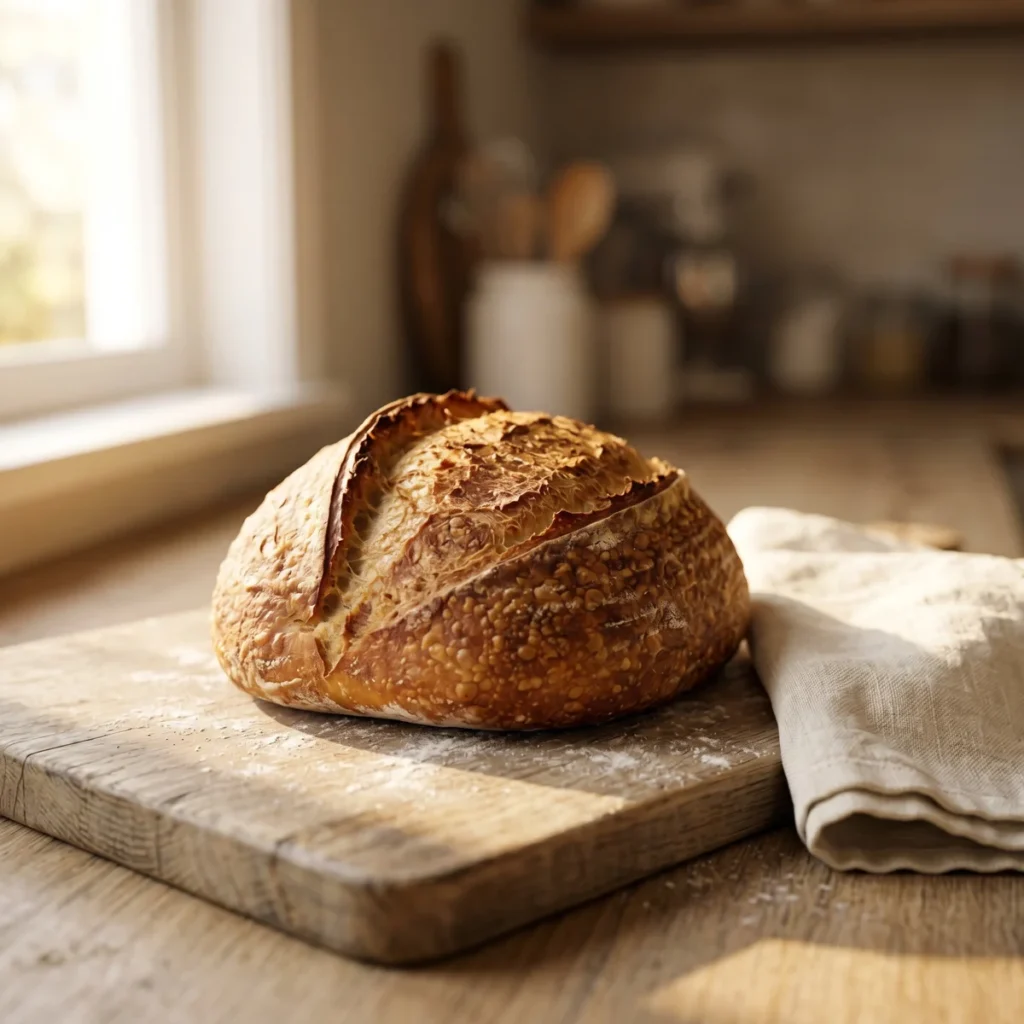
If you’ve baked a few sourdough loaves, you already know the basics — keep it on the counter, don’t put it in the fridge, freeze what you won’t eat. But “the basics” leave a lot of questions open. Cut-side down on a board, or in a bag? Linen, beeswax, or that bread box your aunt gave you? Plastic if you’re in a hurry?
Here’s the honest answer: the storage approach that works best for most home bakers, and the few times it doesn’t.
The Short Answer
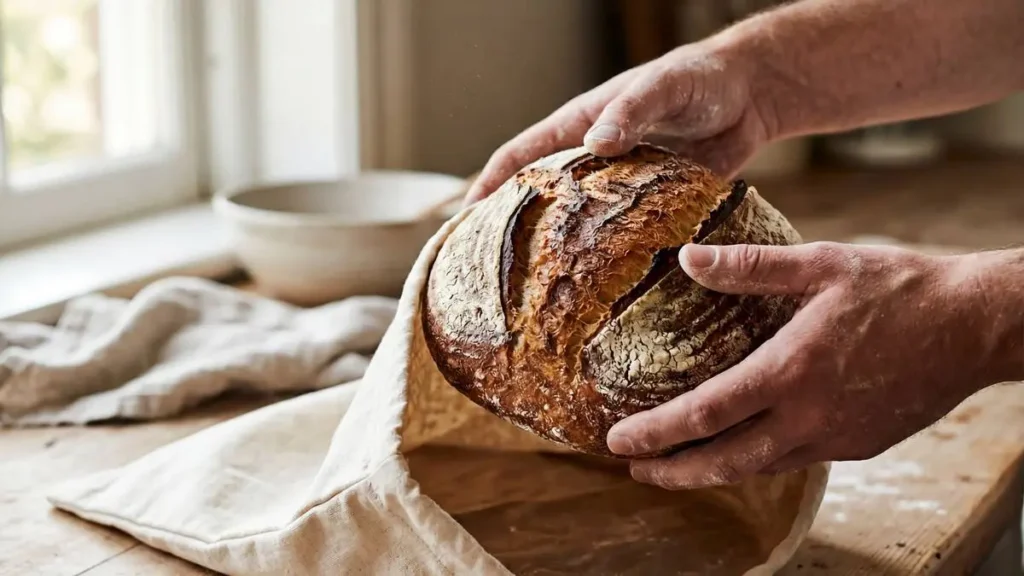
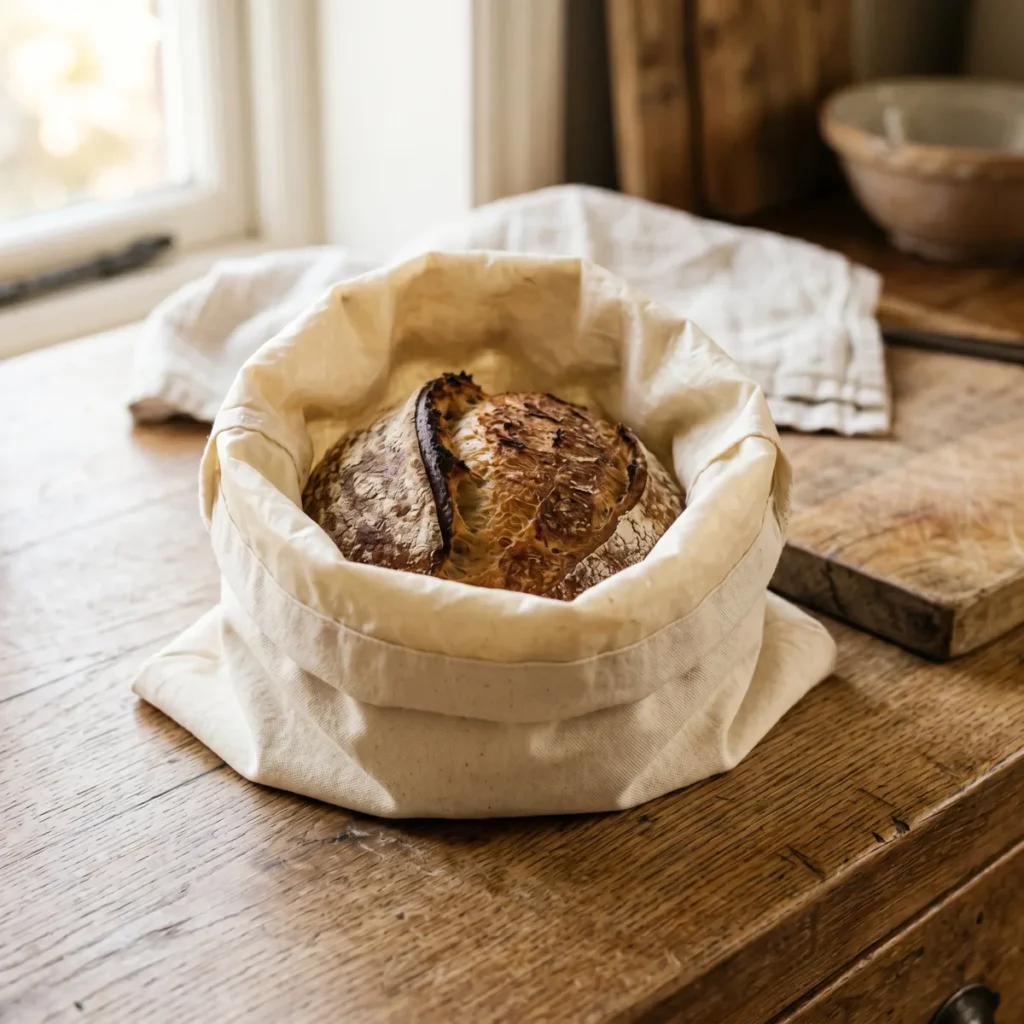
For most home bakers eating sourdough within a few days, the best method is simple: store it at room temperature in a way that protects the cut side while letting the loaf breathe. A wooden board or a breathable bag can both work. A beeswax-lined cotton bag is one of the better options because the coating helps slow moisture loss without sealing the bread in like plastic.
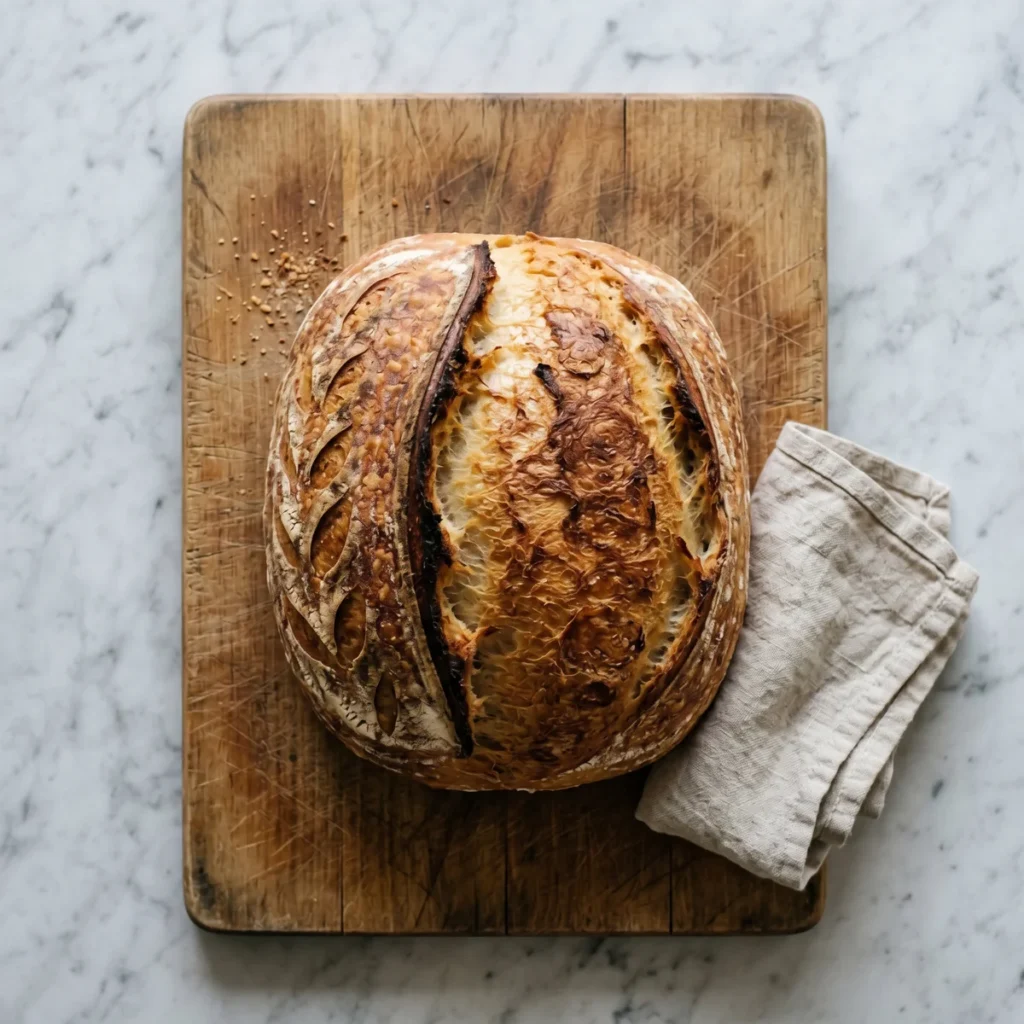
Why This Method Works (And Most Others Don’t)
Sourdough loses quality in two main ways: the crust loses its bite, and the crumb dries out. Both problems trace back to moisture — specifically, where it’s going and how fast.
When you leave a loaf fully exposed on the counter, moisture evaporates from the crust quickly. The crust hardens, the crumb dries, and pretty quickly, the loaf starts to feel like a different bread. Seal the same loaf in a plastic bag and you flip the problem: moisture from the crumb migrates outward, hits the plastic, and condenses. The crust softens, sometimes turns damp, while the inside slowly dries anyway. Plastic doesn’t preserve what makes sourdough good — it just trades one failure for another.
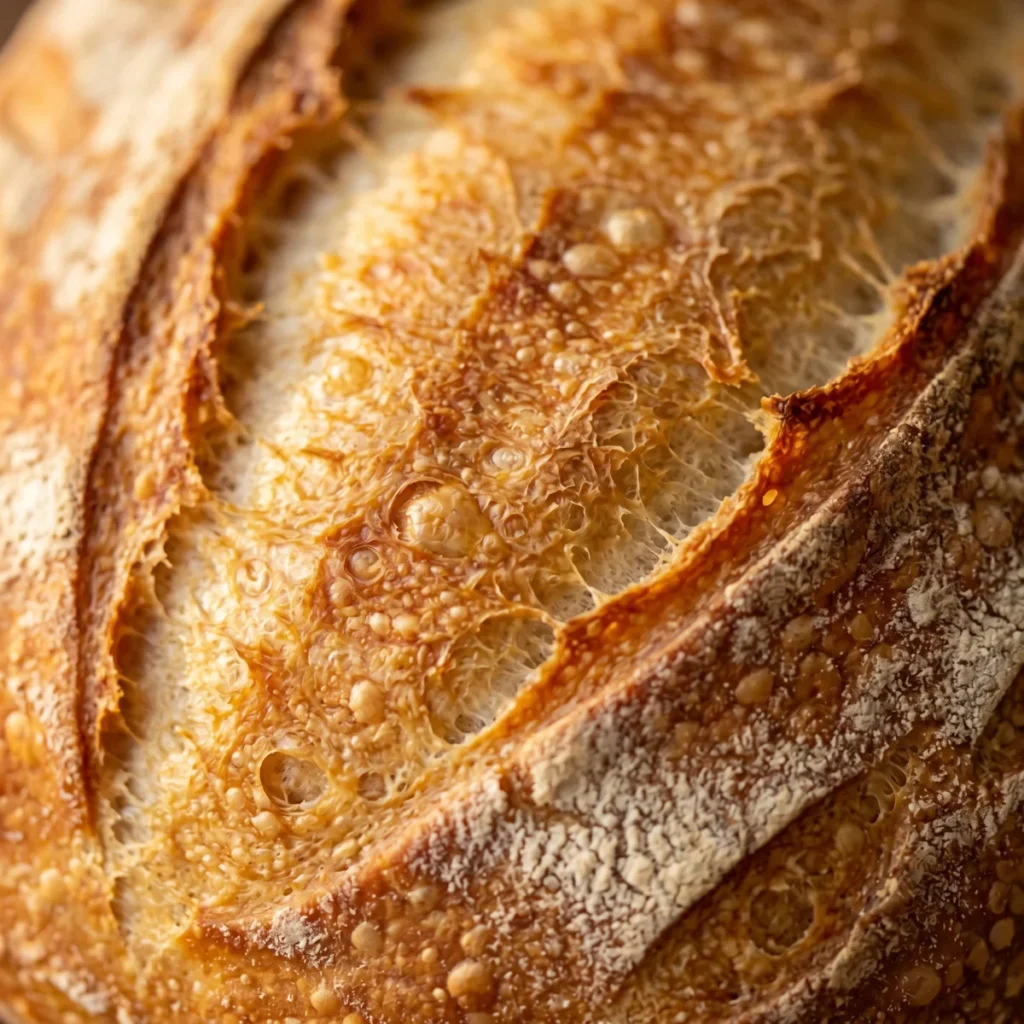
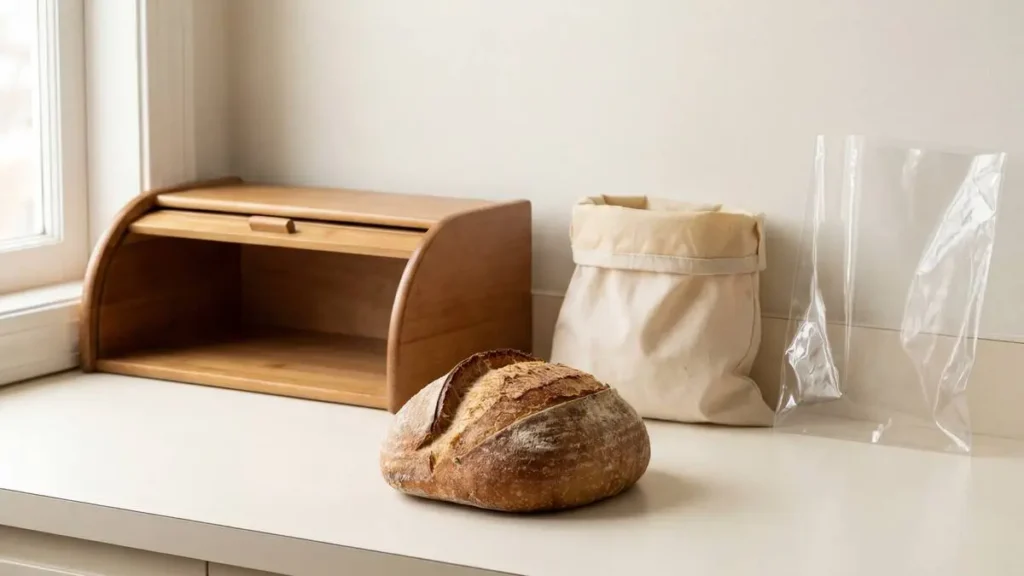
Breathable storage at room temperature solves both. A wooden board with the cut side down protects the soft interior from drying air while leaving the crust exposed enough to avoid trapped moisture. A breathable bag does the same thing more completely — it slows the rate of moisture loss across the whole loaf without sealing vapor against the crust.
A beeswax-lined cotton bag is one of the better options in this category. Cotton breathes; the beeswax coating adds just enough resistance to slow rapid evaporation. The result is a loaf that stays closer to how it came out of the oven for longer than it would on an open counter, without the plastic-bag tradeoff.
The fridge and freezer have their place , covered in the next section , but for most home bakers, the best way to store sourdough bread is breathable storage at room temperature, eating within a few days. For the full breakdown of why sourdough behaves the way it does in storage, see our complete guide on how to store sourdough bread.
When Room Temperature Isn’t the Right Answer
Three situations change the calculation.
Hot, Humid Kitchens
If you’re baking in a Florida summer or a New Orleans July, room temperature storage gets harder. Mold can appear sooner than it would in a dry climate. In that case, refrigeration becomes a reasonable tradeoff — the cold slows mold growth, even though it accelerates staling through a process called starch retrogradation. Your crumb gets drier and your crust harder, but you reduce the chance of losing the loaf to mold before you get through it.
The fix when you do refrigerate: wrap tightly to slow moisture loss, and revive the loaf before eating by warming it for a few minutes in a 350°F oven. It won’t taste fresh-baked again, but it’ll be edible.
Bulk Baking
If you bake two or three loaves at once and won’t finish them in a few days, freezing beats trying to stretch room-temperature storage. Slice the loaf first, wrap tightly in plastic wrap or foil, and freeze. Individual slices can be toasted directly from frozen — no thawing needed. The same freezing principles apply to other bread types — see our broader guide on keeping bread fresh for non-sourdough loaves.
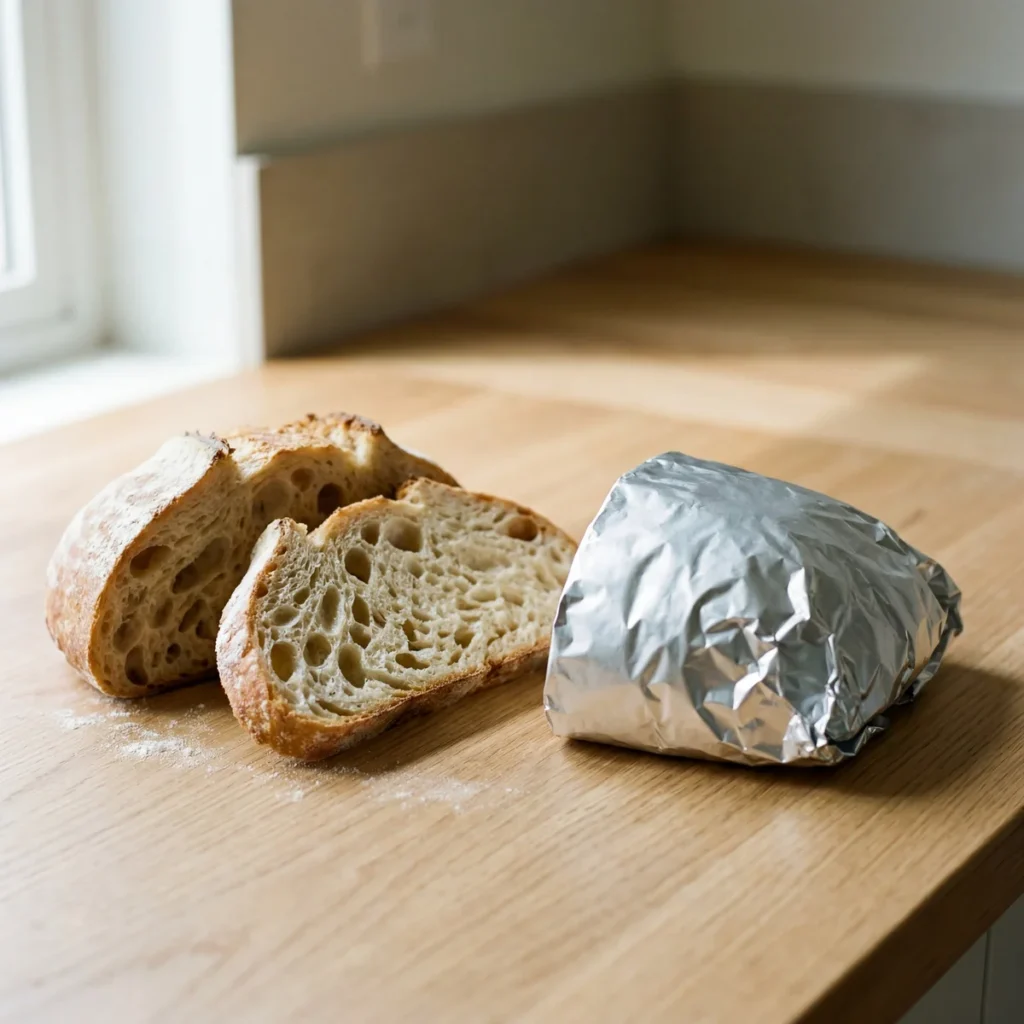
Freezing slows staling dramatically. The texture shifts slightly when you thaw, but it’s a fraction of what happens in the fridge.
Long Storage Windows
Anything past a few days, the answer is the freezer, not the counter. Room-temperature breathable storage is for the loaf you’re actively eating. Once you’re past that window, the math changes — preservation matters more than texture.
For everything else — the daily-eating, fresh-baked loaf in your kitchen — room temperature in a breathable bag is the answer.
The Mistakes That Trip Up Most Home Bakers
Even with the right storage method, a few small habits can cut your loaf’s good window short. These are the ones that trip people up most often.
Storing a warm loaf. If you bag bread before it’s fully cooled, the trapped steam condenses inside the bag and softens the crust within hours. Wait until the loaf is room temperature — usually two to three hours after it comes out of the oven — before any storage decision.
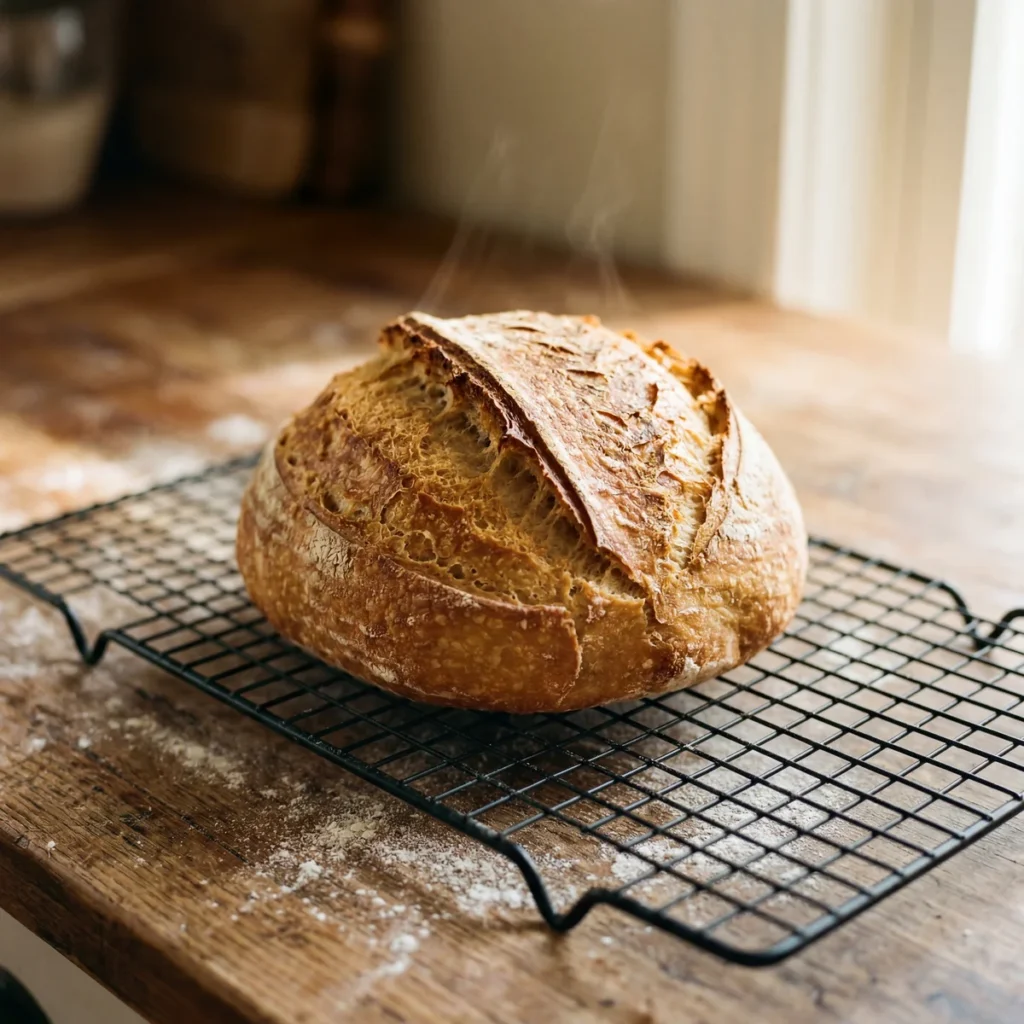
Cutting the whole loaf at once. Every cut surface is a new place for moisture to escape. Slice as you eat, not before. If you’ve already pre-sliced, store cut-side flat against a board or in a tightly packed bag.
Using plastic “for now” and forgetting. A plastic bag for an hour while you finish dinner is fine. A plastic bag overnight, and the crust usually pays for it. If you reach for plastic out of habit, it’s worth keeping a breathable bag visible on the counter so the better option is the easier one.
Refrigerating “just in case.” Unless you’re managing real mold risk in a hot kitchen, the fridge is doing more harm than good. Sourdough’s natural acidity can help slow mold growth, though kitchen conditions still matter — hot or humid kitchens shorten that window.
These habits matter most with sourdough, but the same cooling, slicing, and storage principles apply to other homemade loaves too — our guide to storing homemade bread covers the broader version.
What’s the best way to store homemade sourdough bread?
The best method for most home bakers is room-temperature storage in a breathable bag, with the cut side protected. This protects the cut side while helping the crust avoid trapped moisture. A beeswax-lined cotton bag is one of the better options in this category because the coating helps slow evaporation without sealing in vapor like plastic. For loaves you won’t finish within a few days, freezing is the better option.
How do I keep sourdough bread fresh without refrigeration?
Keep the loaf at room temperature, cut side protected, in a breathable bag or wrapped loosely in cloth. The two enemies are dry air, which hardens the crust, and trapped moisture, which softens it. Breathable materials like cotton or beeswax-lined cotton help manage both — they slow evaporation without creating the condensation problem that plastic does. Avoid fully sealed containers for the same reason.
Should I store fresh-baked sourdough on the counter or in the fridge?
Usually the counter. Refrigeration accelerates staling through starch retrogradation — the crumb can dry faster and the crust can harden sooner than it would at room temperature. The fridge only makes sense in hot or humid kitchens where mold becomes a real risk before the loaf is finished. For typical home conditions and a loaf you’ll eat within a few days, room-temperature breathable storage is the better choice.
How long does sourdough last at room temperature?
Duration varies by loaf density, room humidity, and storage method, so specific day counts are misleading. A well-baked sourdough stored in a breathable bag at room temperature typically stays at its best for a few days before the crust softens or the crumb starts to dry. Once the texture shifts noticeably, toasting can help revive most loaves. For longer storage, slice and freeze once the loaf is fully cooled.
Can I use a beeswax bread bag for sourdough?
Yes — a beeswax-lined cotton bag is one of the better-suited options for sourdough specifically. The breathable cotton base helps avoid the trapped-moisture problem that softens crusts in plastic, while the beeswax coating helps slow evaporation enough to protect the crumb from drying out too quickly. Sourdough’s firm crust and dense crumb make it a good match for this kind of balanced airflow. The bag works for daily-eating storage, not long-term preservation — for that, freeze the loaf.
Why Beeswax-Lined Cotton Bags Work
Beeswax-lined cotton bags combine two complementary materials. Cotton provides a breathable base — air can pass through the weave, which means the bag is less likely to trap moisture against the crust the way plastic can. The beeswax-based coating adds a thin layer of resistance over that breathability. It helps slow rapid evaporation without sealing the loaf in completely.
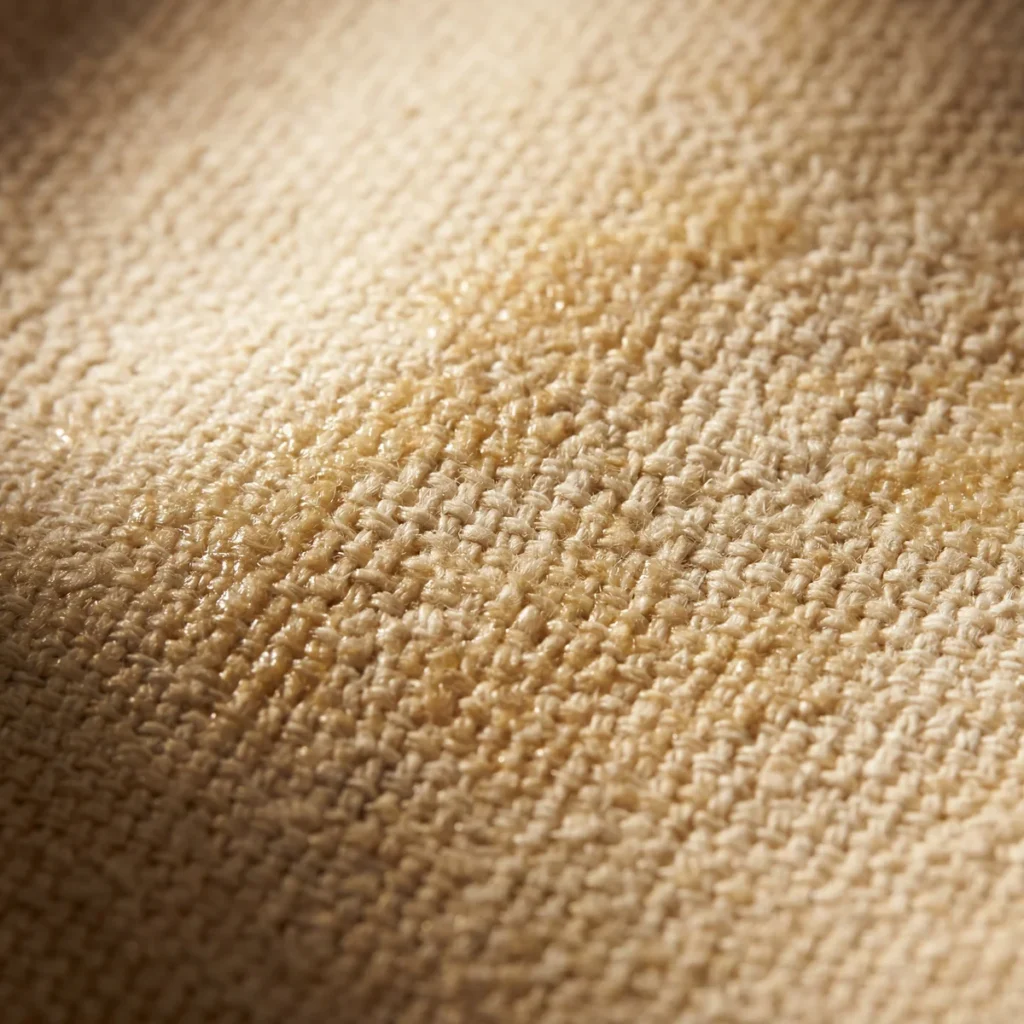
The result is a balance: enough airflow to help the crust avoid trapped moisture, enough barrier to keep the crumb from drying out too quickly. Linen and uncoated cotton breathe more aggressively, which can dry the loaf faster in low-humidity kitchens. Plastic does the opposite — full seal, condensation, soft crust. Beeswax-lined cotton sits between those failure modes.
The coating also helps the bag hold its structure through repeated use. With gentle care, beeswax-lined cotton bags can work as a daily storage tool rather than something you replace after every loaf.
The construction that makes this method work is beeswax-lined cotton — see our complete guide on beeswax bread bags for what to look for.
Talorne’s beeswax bread bag is built around this principle. It uses 8oz cotton — a heavyweight weave designed for repeated handling and gentle cleaning — with a beeswax-based food-contact lining made for everyday bread storage. The bag is sized for standard artisan loaves and built for repeated use, not single-use disposal.
Pingback: How to Store Sourdough Bread (Without Ruining the Crust)
Pingback: How to Keep Bread Fresh Longer (Without Ruining Texture)
Pingback: How to Store Homemade Bread (Without Losing the Crust or Crumb)