
You spent three hours baking that loaf — and it can lose its crust overnight if you store it wrong.
Sourdough storage is not complicated, but most advice skips the context you need to understand why one method works better than another. This guide explains the mechanics first, then the methods — so you know what is happening and can adjust for your own kitchen.
Here’s what actually works.
The Short Answer
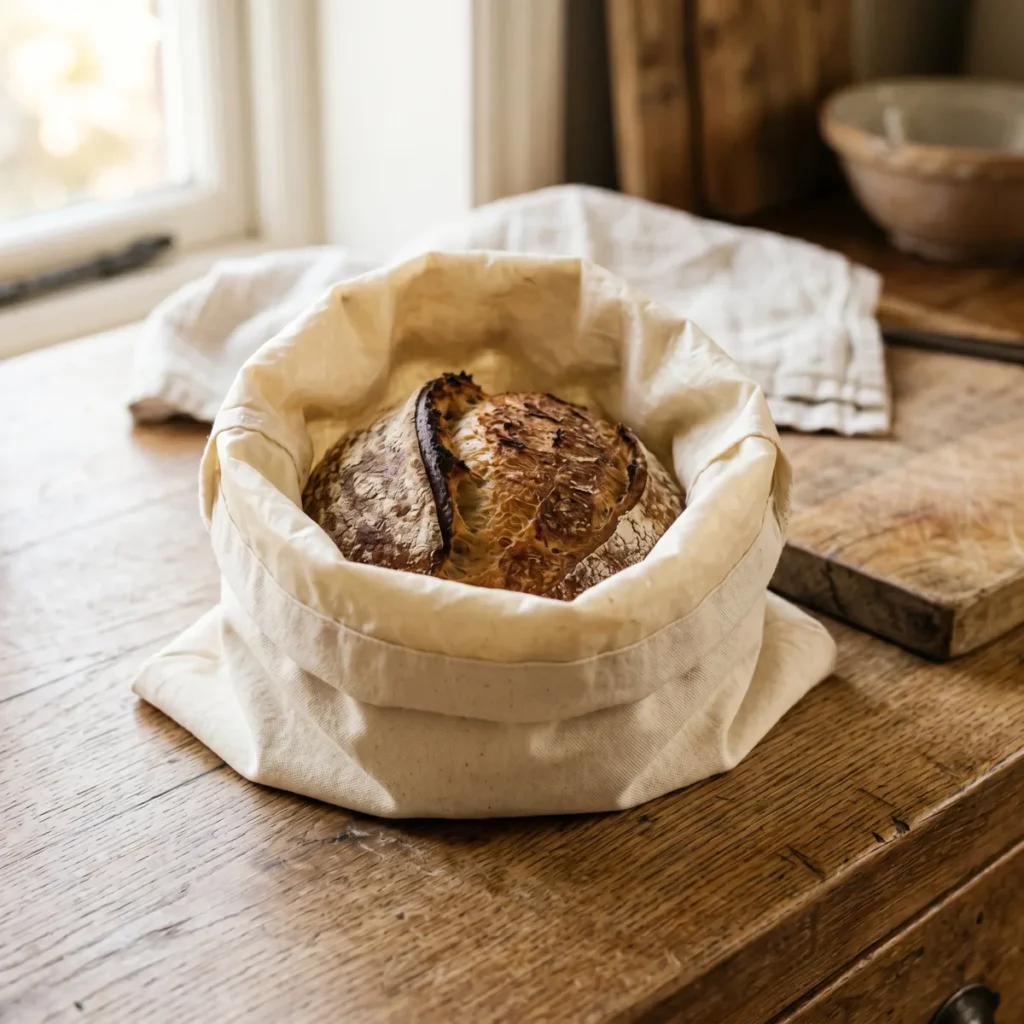
Most sourdough loaves keep best for a few days at room temperature when stored in a breathable bag that helps balance moisture. Beeswax-lined cotton bags allow controlled airflow without sealing in humidity. Sealed plastic bags can trap moisture and may soften the crust sooner than breathable storage.
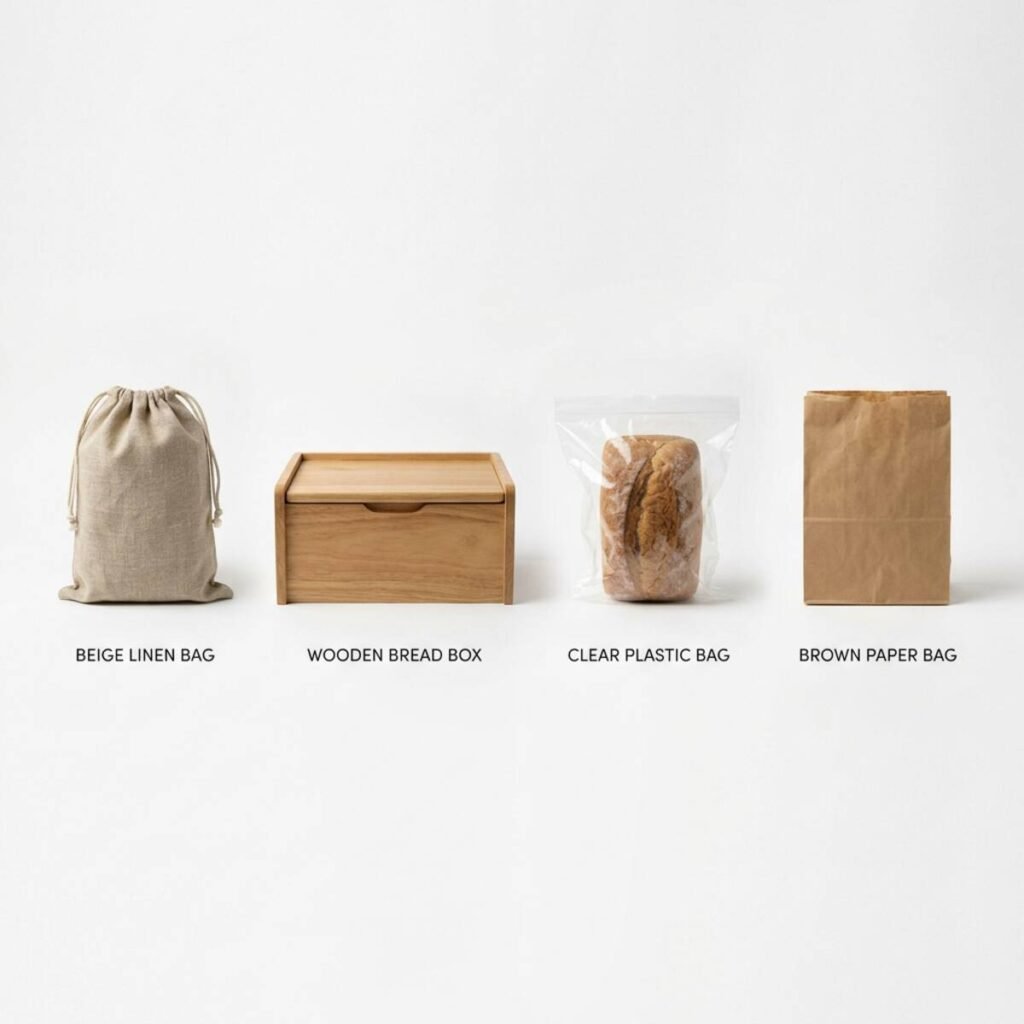
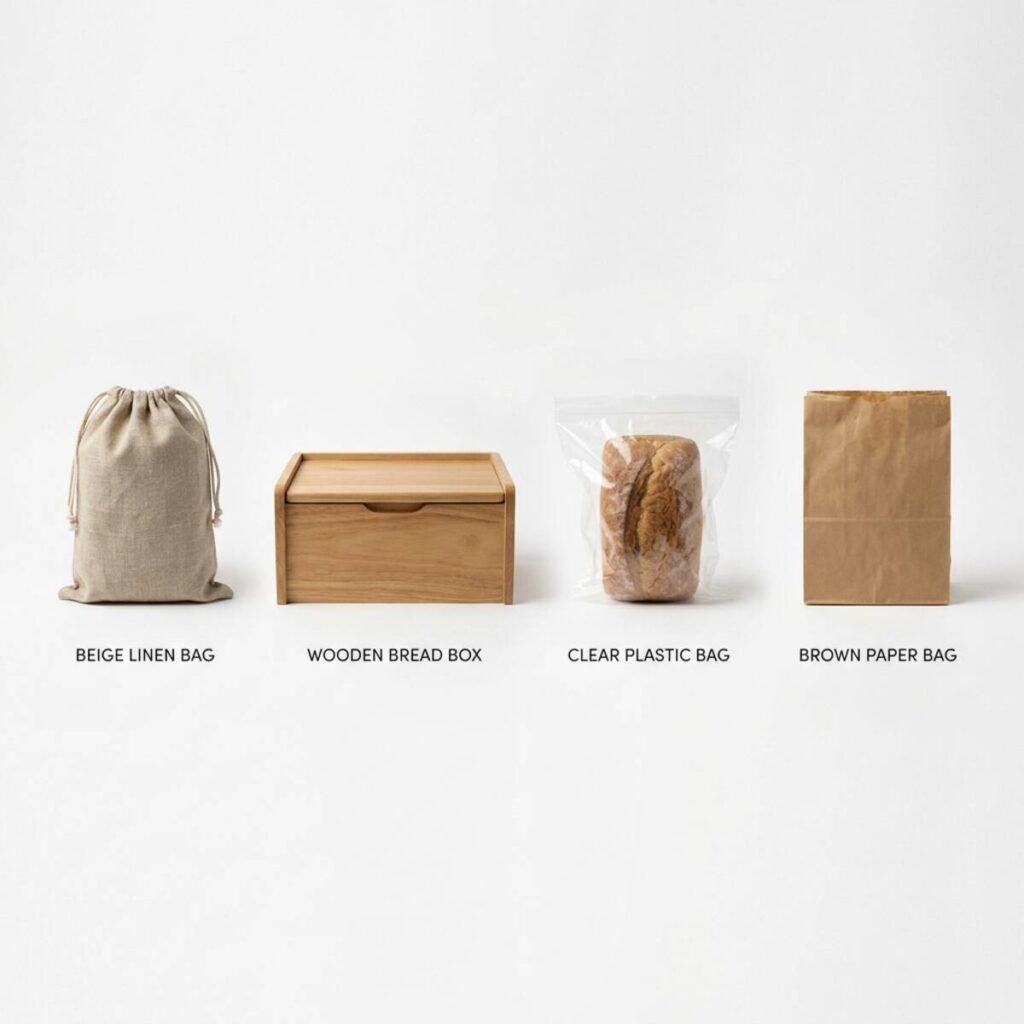
How Different Storage Methods Compare
Here’s how the main storage options stack up for crusty sourdough:
| Method | Duration | How It Works / Tradeoffs |
|---|---|---|
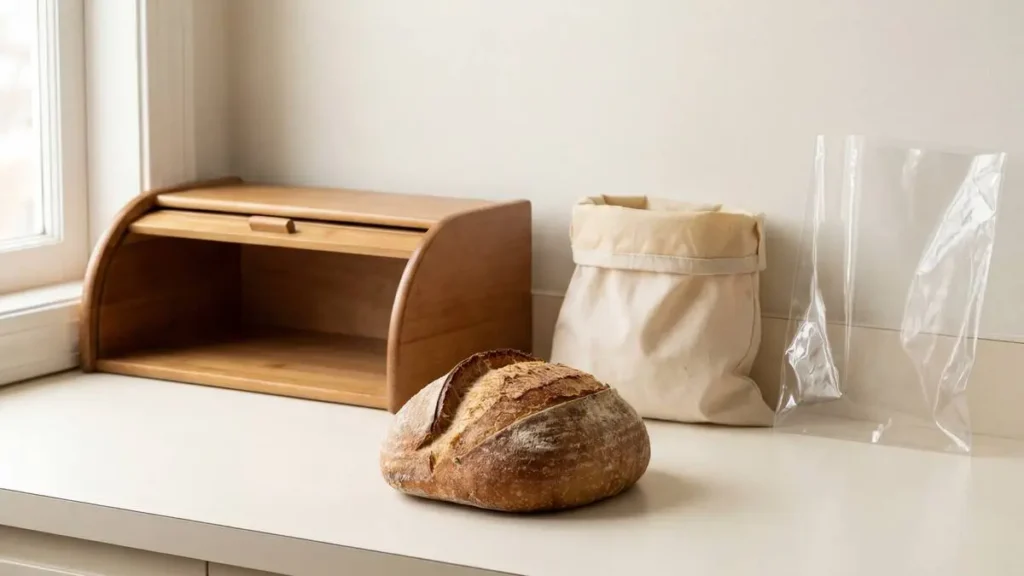
| Room temp (open air) | Very short term | Moisture evaporates quickly; crust hardens, crumb dries out |
| Plastic bag (sealed) | Short term | Traps humidity; crust may soften, condensation can form |
| Bread box | Short term | Shields from light and air; doesn’t actively regulate moisture |
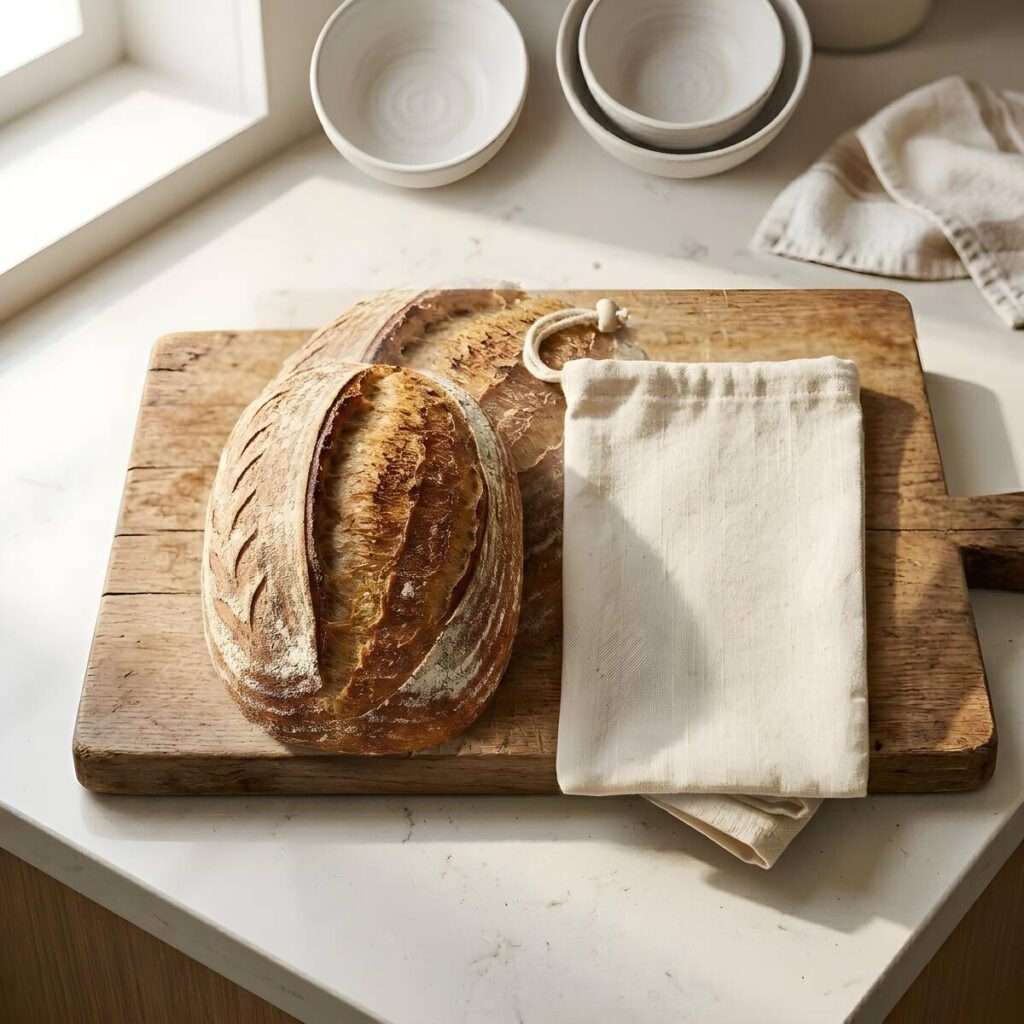
| Cloth/linen bag | Short term | Breathable but may dry out faster in low-humidity environments |
| Beeswax-lined cotton bag | Varies (balances moisture longer than sealed containers) | Breathable coating helps balance moisture and airflow; higher cost than plastic or cloth |
| Refrigerator | Extended (texture changes) | Can slow mold growth in some conditions but accelerates staling; crust hardens, crumb dries |
| Freezer | Long-term storage | Freezing slows staling dramatically; requires thawing, texture changes slightly |
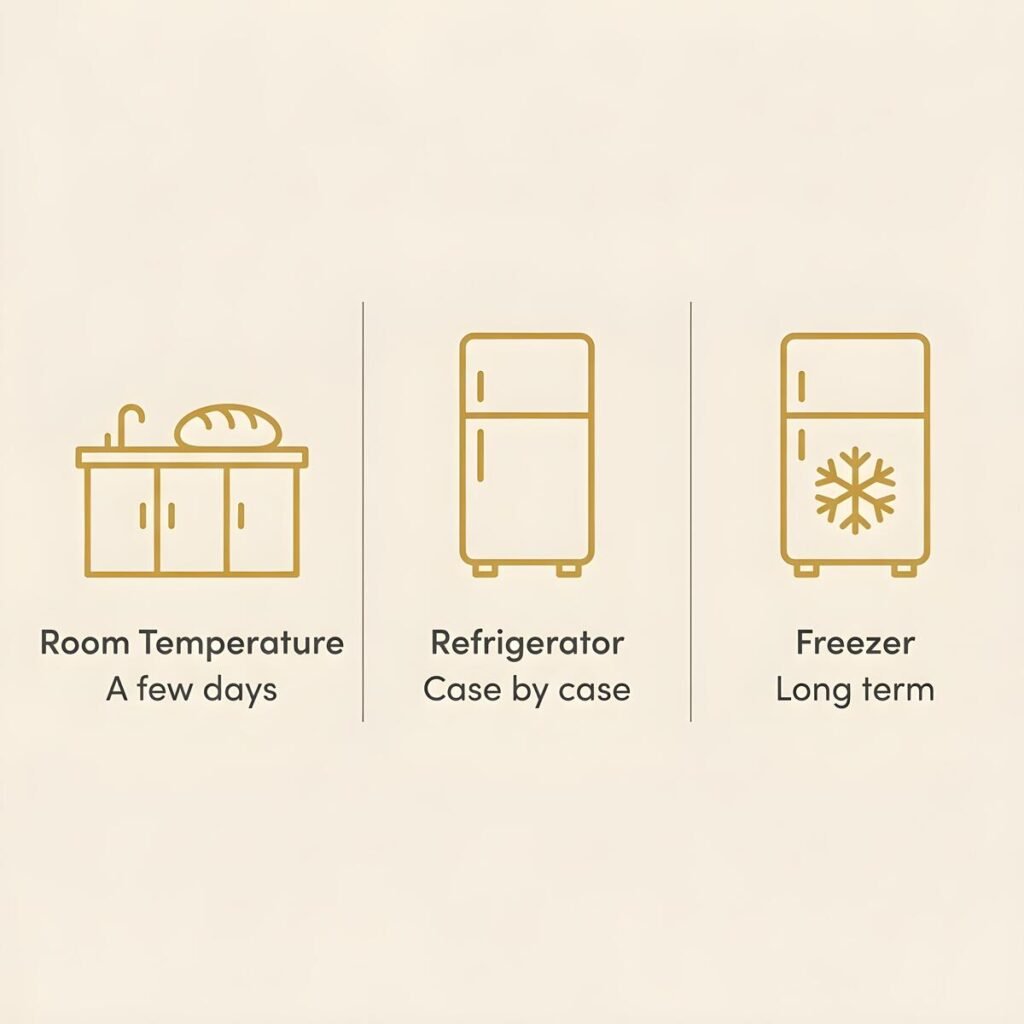
Room Temperature vs Refrigerator vs Freezer
Room Temperature Storage
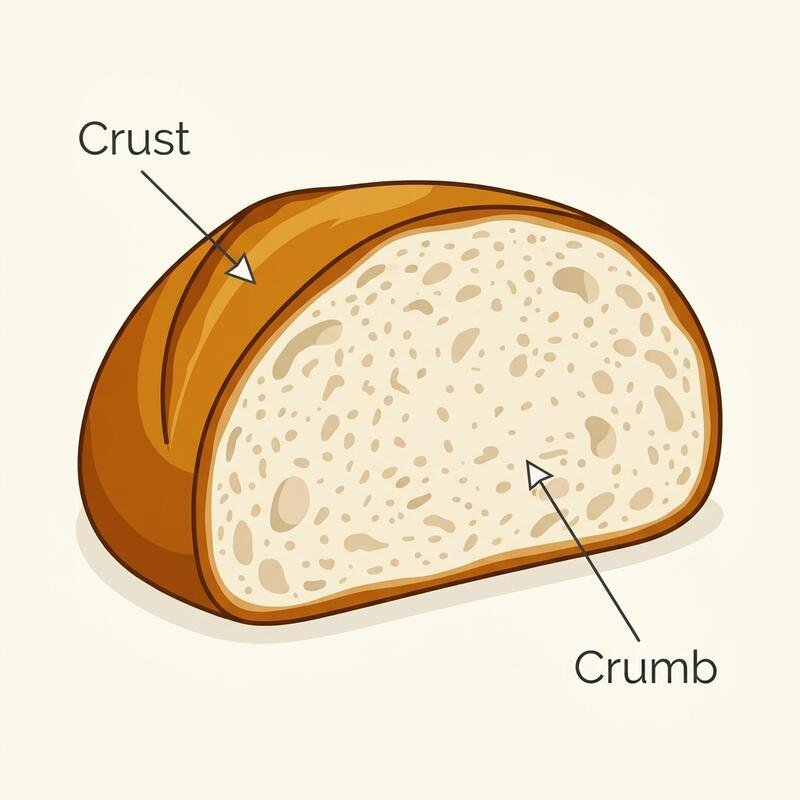
Room temperature storage works well when humidity stays moderate and you plan to eat the loaf within a few days. Moisture naturally evaporates from the crust over time, which is why bread left on a counter hardens as it sits.
Breathable materials like beeswax-coated cotton or linen slow this process by allowing controlled airflow — enough to prevent condensation buildup, but not so much that the loaf dries out rapidly. In very humid climates or during summer heat, room temperature storage may require closer monitoring.
A whole uncut loaf keeps longer than a sliced one because the crust protects the crumb. In humid kitchens, watch for mold appearing sooner after a few days. In dry kitchens, moisture loss and staling are the bigger concern.
Refrigerator Storage (Extends Shelf Life but Changes Texture)
Refrigeration extends shelf life by slowing mold growth in some conditions, but it also accelerates staling through a process called starch retrogradation. The crumb can become drier and the crust harder, even though the bread may remain free of visible mold for longer.
This tradeoff makes sense in warm or humid kitchens where mold can appear sooner, or when you need to keep bread edible for extended periods. For daily eating where texture matters, room temperature storage in a breathable bag often delivers better results.
If you do refrigerate sourdough, wrap it loosely in a cloth or paper bag rather than sealed plastic. This can help keep the crust from becoming overly soft while still protecting the loaf from absorbing fridge odors.
Freezer Storage (Best for Long-Term)
Freezing works well for long-term storage, particularly when you bake multiple loaves at once or won’t finish a loaf within a week. Slice the bread first, wrap tightly in plastic wrap or foil, and freeze for extended periods.
Individual slices can be thawed at room temperature or toasted directly from frozen. Freezing slows staling dramatically, though it requires planning ahead and changes texture slightly upon thawing.
For daily ritual storage where you’re eating fresh-baked bread within a few days, room temperature methods often feel more natural. Freezing is best reserved for backup storage or bulk baking situations.
Why Sourdough Goes Stale (And What You Can Control)
Sourdough staling happens through two main processes: moisture evaporation from the crust, and starch retrogradation in the crumb.
When bread sits in open air, the crust loses moisture and hardens over time. When sealed in plastic, moisture migrates from the crumb to the crust, which can make the exterior soft or even damp while the interior dries out.
Breathable materials like beeswax-coated cotton allow controlled airflow. The coating slows moisture loss without sealing it in completely, which helps balance the humidity around the loaf. This is different from linen or uncoated cotton (which may dry the loaf faster in low-humidity environments) and plastic (which traps moisture and can create condensation).
Sourdough’s natural acidity, created during fermentation, may slow mold growth slightly compared to yeasted breads, but storage conditions still matter. High humidity, warm temperatures, and sealed containers can all encourage faster spoilage regardless of the bread type.
The goal is not to stop bread from changing — it is to slow the wrong kinds of change. You want to preserve crust texture and crumb moisture for as long as possible while your loaf is still at its best.
Common Questions About Storing Sourdough
Can I Store Sourdough in a Plastic Bag?
You can use plastic for short-term storage, but sealed plastic bags can trap moisture and may soften the crust sooner than breathable storage. If you use plastic, consider poking small holes for airflow or transferring to a breathable bag when convenient.
How Long Does Sourdough Last in a Beeswax Bag?
Duration varies by loaf density, room humidity, and how the bread was baked, but breathable beeswax-lined bags help balance moisture longer than sealed containers. Most loaves stay at their best for a few days when stored this way.
Should I Refrigerate Sourdough Bread?
Refrigeration extends shelf life by slowing mold growth in some conditions but accelerates staling through starch retrogradation. It makes sense in warm or humid kitchens where mold can appear sooner, but for daily eating where texture matters, room temperature storage in a breathable bag often works better.
Can I Freeze Sourdough Bread?
Yes. Slice the bread first, wrap tightly in plastic wrap or foil, and freeze for extended storage. Thaw slices at room temperature or toast directly from frozen. Freezing is useful for long-term storage but requires planning ahead.
What’s the Best Way to Revive Stale Sourdough?
Lightly dampen the crust with water, then heat in a 350°F (175°C) oven for several minutes. This can rehydrate the crust and soften the crumb temporarily. Works best within a few days of baking, though results vary by loaf.
Why Beeswax-Lined Cotton Bags Work
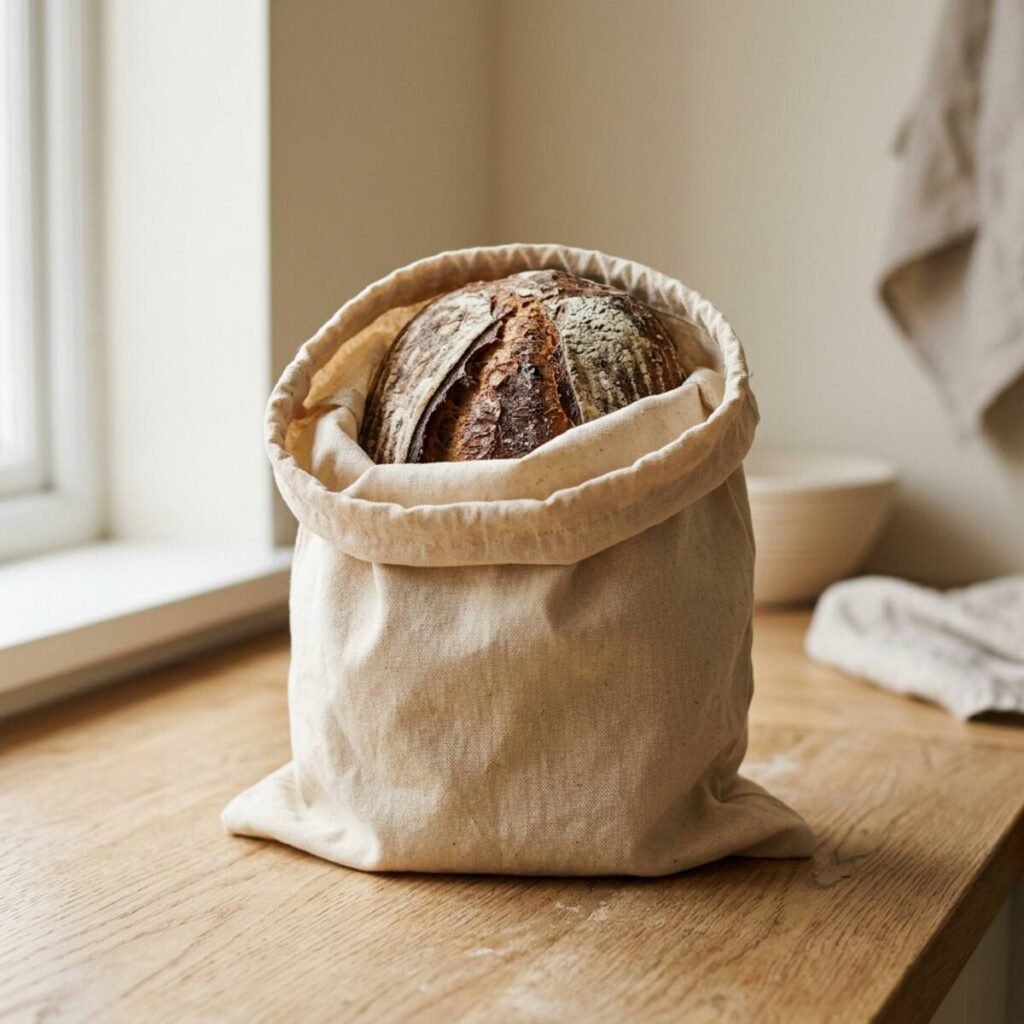
Beeswax-lined cotton bags combine two complementary materials: cotton provides a breathable base, and beeswax coating helps balance moisture and airflow. The coating allows some airflow while slowing rapid evaporation, which can help keep the crust from hardening as quickly as it would in open air.
This differs from linen or uncoated cotton (which may dry loaves faster, especially in low-humidity environments) and sealed plastic (which can trap moisture and create condensation). The beeswax layer adds a light protective coating that supports repeated use with gentle care, making it a long-term storage option rather than a disposable one.
For a focused verdict on which single method works best for most home bakers, see our guide on the best way to store sourdough bread.
Sourdough is worth the effort — don’t let bad storage undo three hours of baking. The principle is simple: your loaf needs to breathe without drying out. A breathable bag at room temperature handles most situations for home bakers eating through a loaf within a few days. The fridge and freezer have their place, but they come with tradeoffs that aren’t always worth it when fresh bread is the point.
Match the method to your kitchen. High humidity, summer heat, and sealed containers are the three things most likely to work against you. Get those right and sourdough storage stops being a mystery.
The TALORNE set includes two XL beeswax-lined bread bags: one Wheat Stalk and one Bread Sketch, each approximately 17 × 13 inches laid flat. Allow room for the loaf and roll-top closure. Now available on Amazon US. View current pricing and delivery options on Amazon.
For general tips on keeping any bread fresh — whatever type you bake — see our guide on how to keep bread fresh.
Homemade yeasted bread follows similar storage principles — here’s how to store homemade bread.
Beeswax-lined cotton bags offer a breathable, reusable option for sourdough — here’s how beeswax bread bags work and what to look for.
Wondering whether a bread box or a bag is the better fit for your kitchen? Here’s our full bread box vs bread bag comparison.
Pingback: How to Store Homemade Bread (Without Losing the Crust or Crumb)
Pingback: Best Way to Store Sourdough Bread: Counter or Fridge?
Pingback: Beeswax Bread Bag: How It Works and What to Look For
Pingback: Sourdough Bread Bags: How to Choose the Right One
Pingback: Do Bread Boxes Work? Bread Box vs Bread Bag Compared