
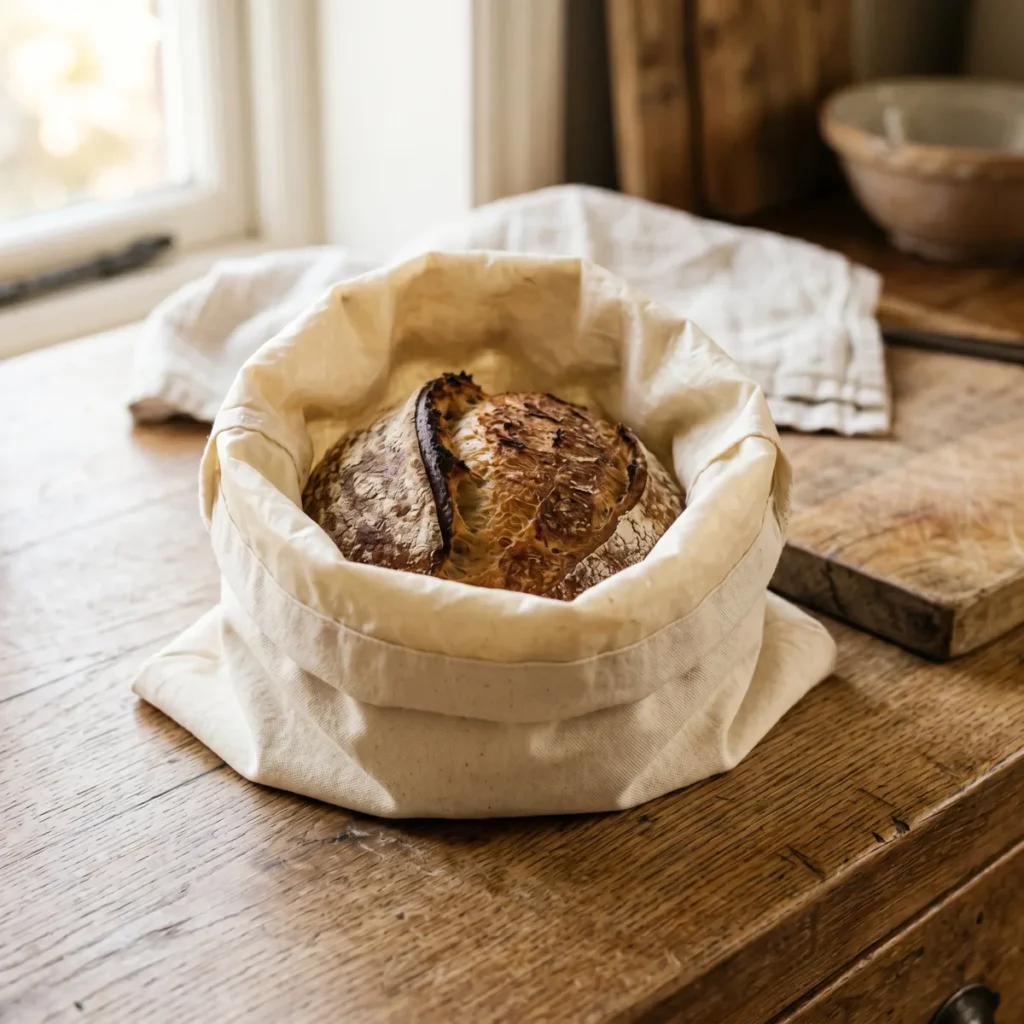
If you’ve been searching for a reusable counter-storage option for bread and keep seeing beeswax bread bags come up, the idea makes sense on the surface — a natural coating on cotton that balances moisture without sealing everything in plastic. But there’s a gap between how they’re marketed and what they actually do. Before buying one, it helps to understand the mechanism: what the coating actually does, where these bags work, and where they don’t.
Here’s the honest breakdown.
What Is a Beeswax Bread Bag?
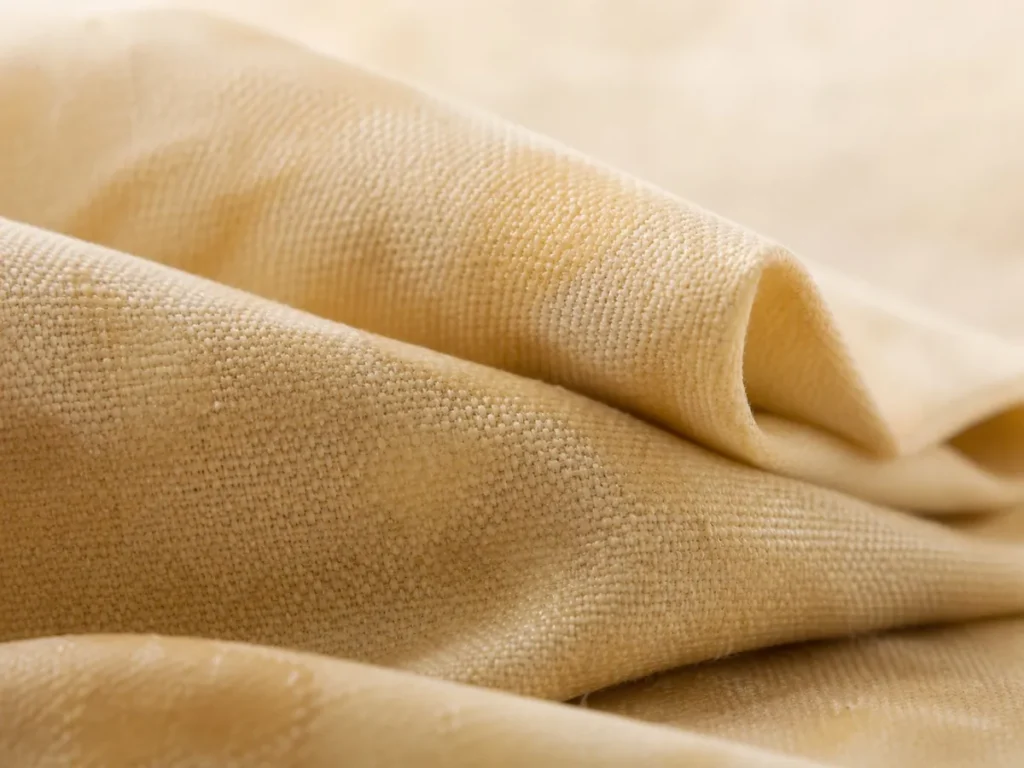
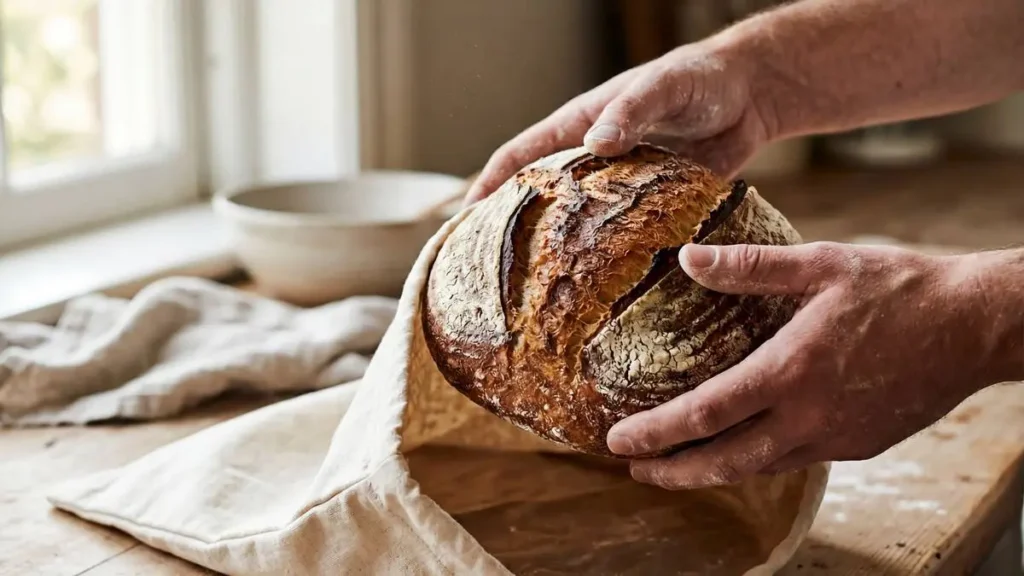
A beeswax bread bag is a cotton bag with a beeswax-based coating on the inside. The coating slows moisture loss without creating a sealed environment, which helps protect crust texture during short-term counter storage. The cotton base allows controlled airflow — making it different from plastic (which traps moisture against the crust) and uncoated linen (which may allow the loaf to dry out faster). These bags are designed for room-temperature use, not for the fridge or freezer.
How Beeswax Bags Compare to Common Alternatives
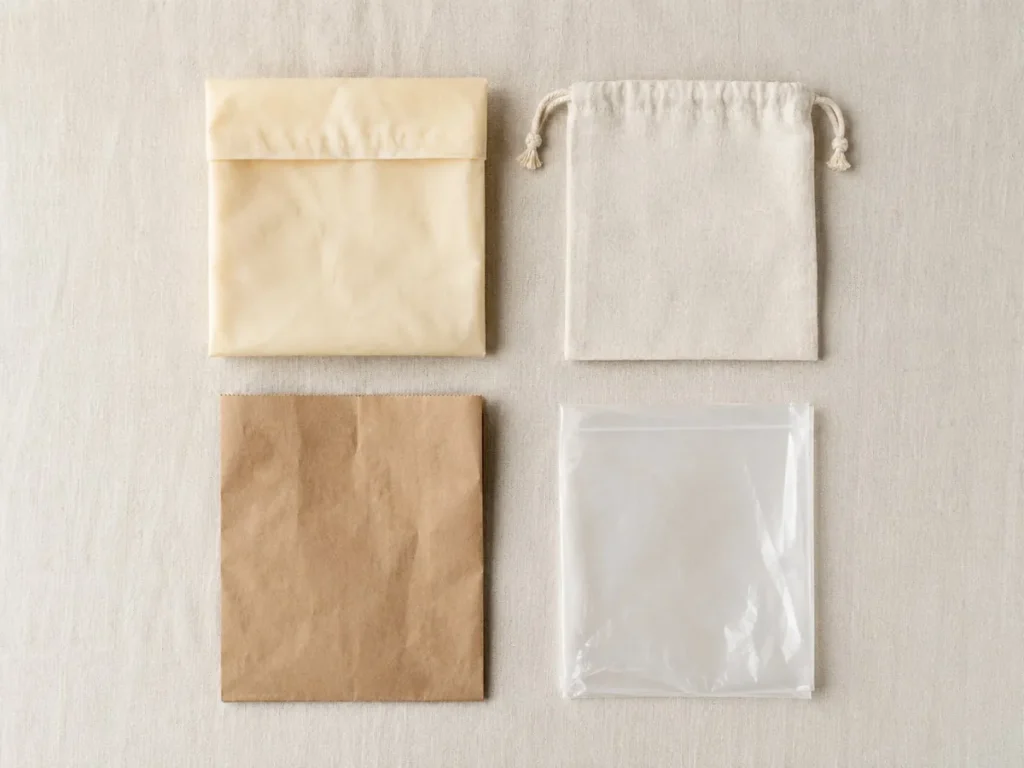
Most people reach beeswax bags after trying something else first. Here’s how they compare to the alternatives buyers typically consider.
Versus plastic bags. Plastic seals moisture in completely, which softens the crust within hours and traps vapor against the bread. Beeswax-lined cotton allows enough airflow to prevent this while still slowing moisture loss. The tradeoff: plastic is cheaper and disposable; beeswax-lined cotton is reusable and designed for longer-term use.
Versus uncoated linen or cotton bags. Linen and uncoated cotton are more breathable than beeswax-lined cotton, which sounds like an advantage but can become a drawback in low-humidity kitchens. Bread in an uncoated bag may dry out faster. The beeswax coating slows this rate of moisture loss without sealing the bag.
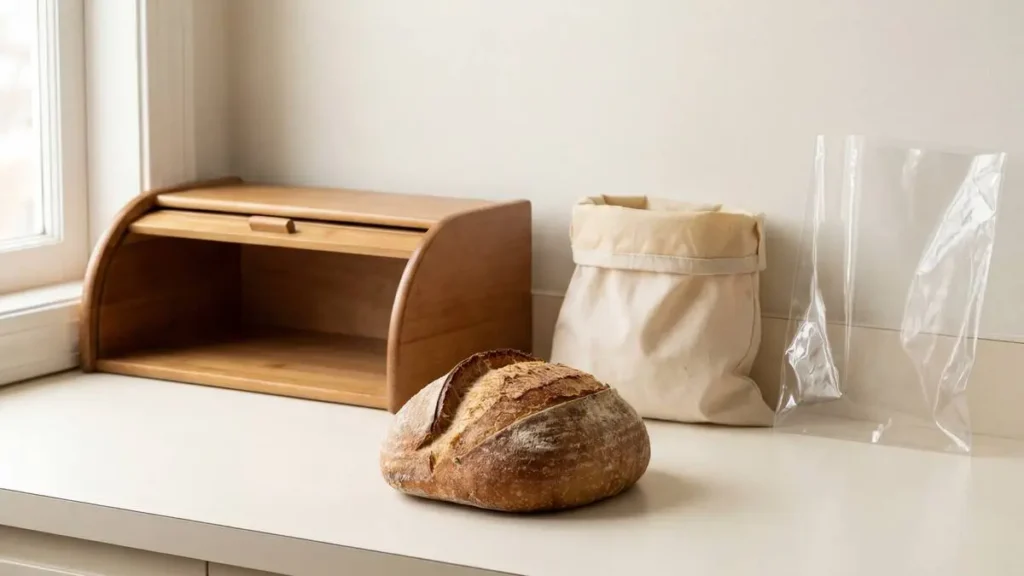
Versus bread boxes. Bread boxes enclose the loaf but don’t actively regulate moisture or airflow — performance depends entirely on the box’s design. They take up counter space and aren’t portable. A beeswax-lined bag is more compact, travels with the loaf, and offers more consistent moisture behavior.
Versus paper bags. Paper is fine for same-day storage but allows rapid moisture loss after that. It’s also single-use. Beeswax-lined cotton is designed for repeated use over months.
Versus freezer storage. Freezing is the right answer for long-term storage — beeswax-lined bags aren’t designed to compete with freezing. They’re meant for the few days after baking when texture matters most.
Room Temperature, Fridge, and Freezer: Where Beeswax Bags Fit
Room Temperature Storage
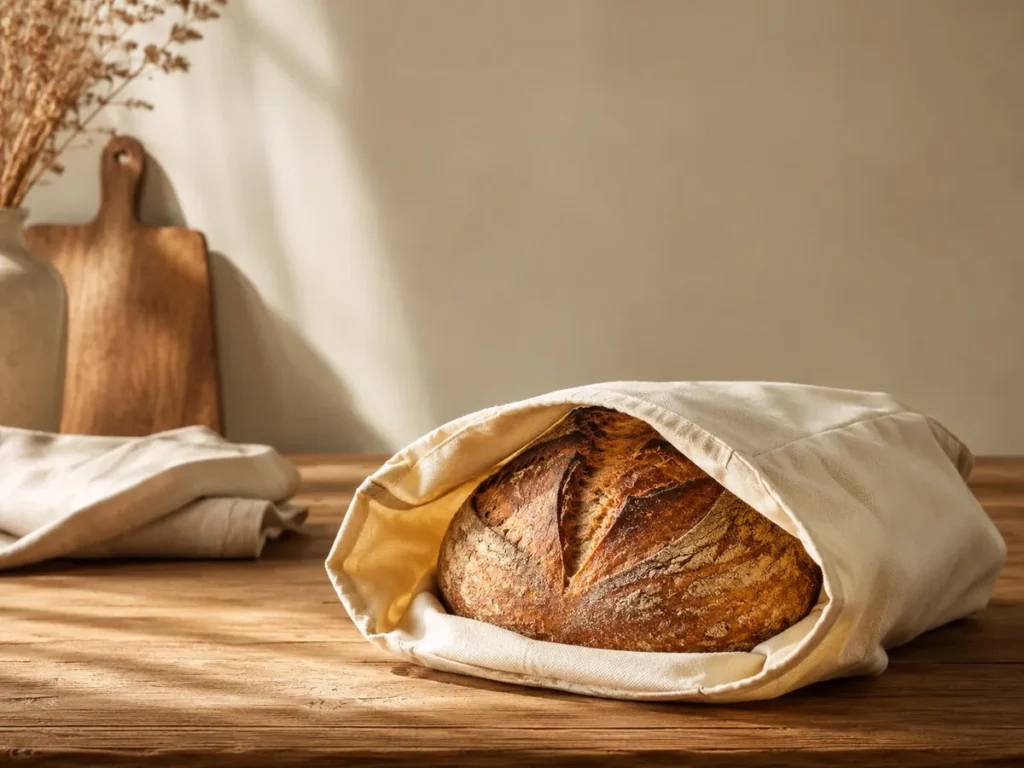
Room temperature is where beeswax-lined cotton bags are designed to work. The coating slows the natural moisture evaporation from the crust — which is the main reason bread left uncovered on a counter hardens quickly. By allowing some airflow but limiting rapid evaporation, the bag helps the crust hold closer to its original texture for a short period. In moderate to humid kitchens, this approach tends to perform well. In very dry environments, the bag may provide less benefit, since vapor moves quickly from the bread into the air regardless of the coating.
Refrigerator Storage
Beeswax bags are not well-suited for refrigerator storage. Cold temperatures cause the wax to stiffen, which changes how the coating behaves. More importantly, the fridge accelerates staling through starch retrogradation — the same process that makes refrigerated bread feel dry and dense even when it hasn’t visibly spoiled. If you need to store bread in the fridge (a reasonable decision in warm, humid climates), a sealed plastic bag or wrap handles that environment better than a beeswax-lined bag.
Freezer Storage
Beeswax-lined bags are not designed for the freezer. Repeated freeze-thaw cycles can stress the coating, and the bag isn’t sealed in a way that prevents freezer burn over extended periods. For long-term storage, slice the bread first, wrap tightly in plastic wrap or foil, and freeze. Beeswax bags work best as the everyday counter storage option — not the long-term solution.
Why Beeswax-Lined Cotton Behaves Differently from Other Materials
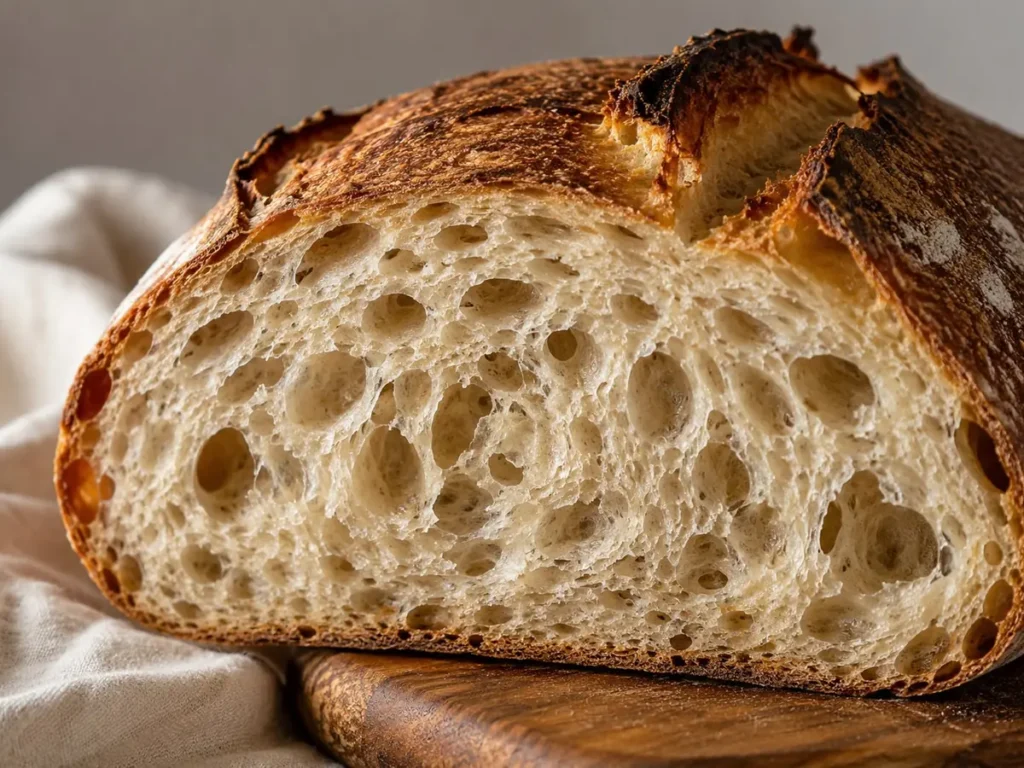
The difference between beeswax-lined cotton and other storage materials comes down to what the coating does at a physical level. Cotton is naturally breathable — its woven structure has microscopic gaps that allow air and water vapor to pass through. Uncoated, this means bread in a linen or cotton bag can lose moisture relatively quickly, especially in lower-humidity environments where vapor moves readily from the bread’s surface into the air.
Beeswax fills many of those gaps in the cotton weave without blocking them entirely. The result is a material that still allows some airflow but slows vapor transmission — which is the mechanism behind moisture loss from bread’s crust. This is different from sealed plastic, which creates a barrier that traps vapor against the bread’s surface. When moisture can’t escape, it tends to migrate from the crumb toward the crust, which is why plastic-stored bread often develops a soft, sometimes damp exterior while the interior dries out.
Cotton weight affects how the coating performs. Heavier cotton — around 8 ounces per square yard — provides more surface area for the beeswax to adhere to and more structure for the bag itself. Lightweight or loosely-woven cotton with a thin wax application behaves differently and may allow more uncontrolled airflow than a heavier fabric with consistent coating coverage.
Cotton weight affects how the coating performs. Heavier cotton — around 8 ounces per square yard — provides more surface area for the beeswax to adhere to and more structure for the bag itself. Lightweight or loosely-woven cotton with a thin wax application behaves differently and may allow more uncontrolled airflow than a heavier fabric with consistent coating coverage.
Sourdough’s fermentation and acidity can affect how it keeps, but storage conditions still matter. The main role of a beeswax-lined bag is texture management — not mold prevention.
Who Should Use a Beeswax Bread Bag?
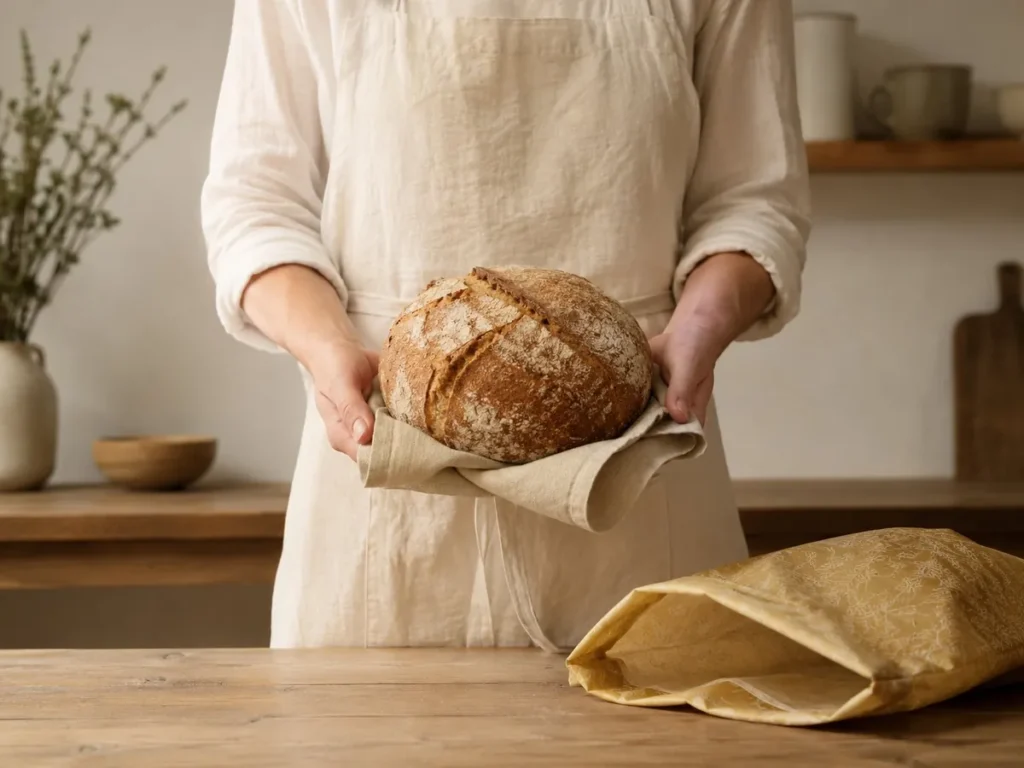
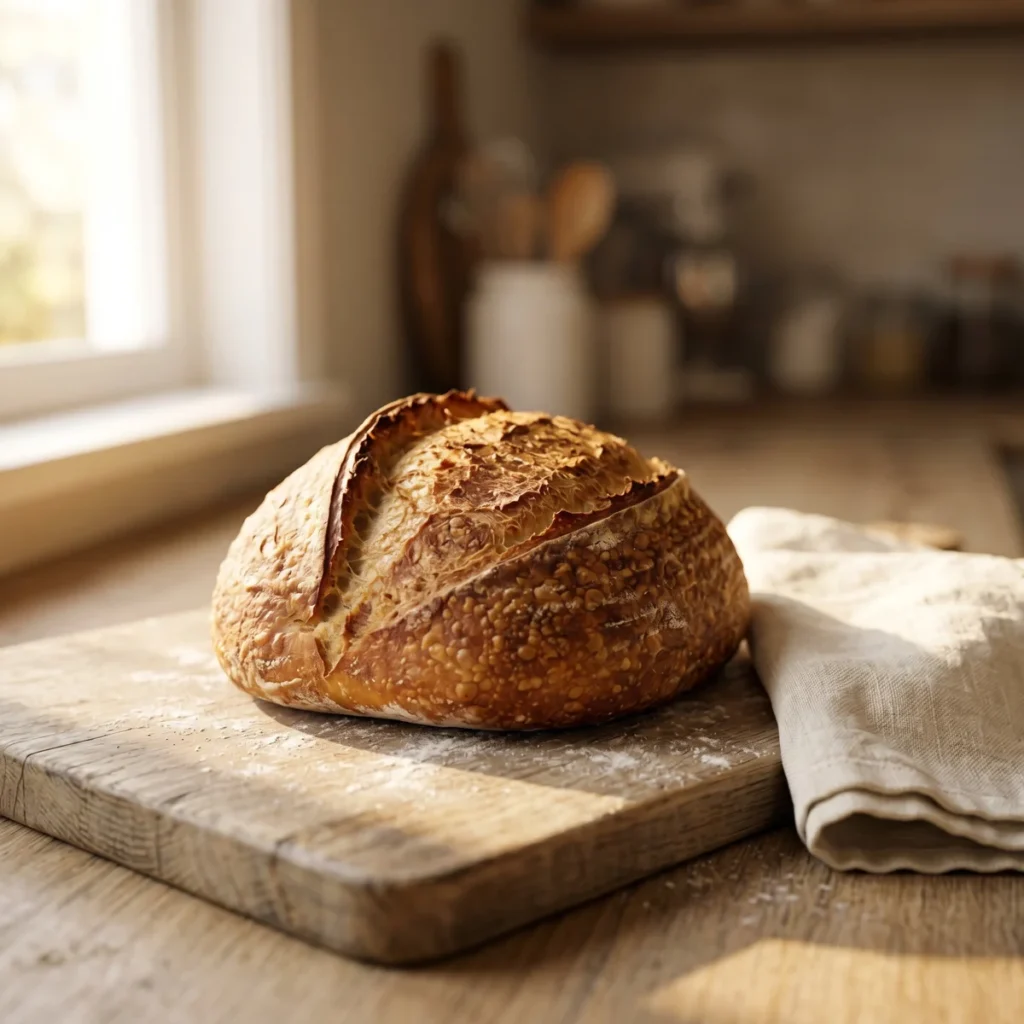
A beeswax bread bag is a good fit for home bakers and bread lovers who regularly bake or buy artisan loaves — sourdough boules, batards, country loaves, or homemade yeasted bread — and want a reusable counter-storage option that helps protect crust texture during the first few days after baking.
It’s less useful if you mainly store soft sliced sandwich bread, refrigerate bread by default, or need long-term freezer storage. For those use cases, sealed plastic or freezer-specific wraps tend to perform better than a breathable beeswax-lined bag.
Frequently Asked Questions
Do beeswax bread bags actually work?
They work for their intended use: short-term room temperature storage where protecting crust texture matters. The coating helps manage moisture better than sealed plastic, which traps vapor, and may outperform uncoated cotton, which can allow the loaf to dry faster in lower-humidity environments. Results vary by loaf density, room conditions, and how recently the bread was baked. These bags are designed to help preserve texture over a few days — not to extend shelf life dramatically.
How do you clean a beeswax bread bag?
Shake out crumbs after each use. For deeper cleaning, hand-wash with cool or lukewarm water and a small amount of gentle dish soap. Avoid hot water — heat can soften or damage the beeswax coating. Air dry completely before storing. Machine washing and hot water are not recommended and can degrade the coating faster than gentle hand-washing.
How long does a beeswax bread bag last?
With proper care — cool-water hand-washing, full air drying, no machine washing — a well-constructed beeswax bread bag can hold up through regular use over time. The coating does gradually thin with repeated washing. Bags cleaned frequently will show coating wear sooner than bags used and washed a few times per week. Some manufacturers offer re-waxing instructions for when the coating eventually wears down.
Can I use a beeswax bread bag for sourdough bread?
Yes — sourdough is one of the better applications for beeswax-lined cotton. Sourdough’s open crumb and harder crust benefit from breathable storage that doesn’t trap steam against the exterior. The bag can help protect crust texture during the first few days after baking, when the loaf is typically at its best and texture matters most.
Can I make my own beeswax bread bag at home?
DIY versions are possible — typically heavy cotton fabric brushed or dipped in melted beeswax, then allowed to cool and harden. The main challenge is achieving even coating coverage across the full fabric surface, and confirming that the materials used throughout are food-safe. Ready-made bags use more controlled application methods and materials tested for food contact. DIY can work as a starting experiment, but coating consistency is harder to achieve at home than in a production setting.
What to Look for in a Beeswax Bread Bag
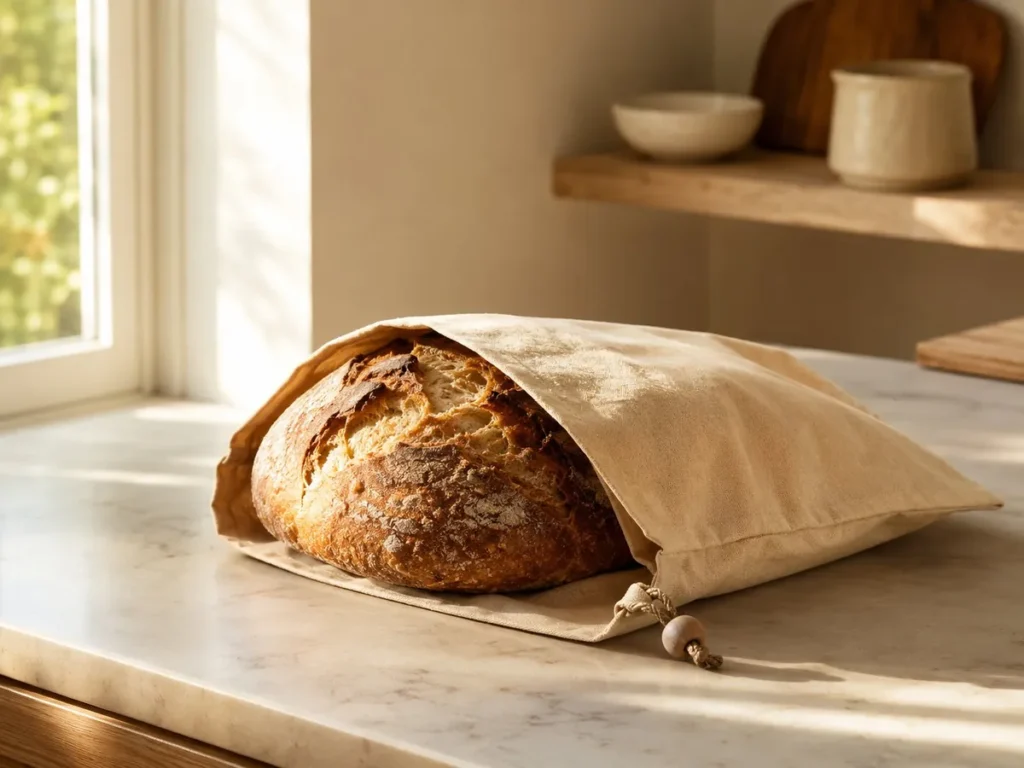
Not all beeswax bread bags are built the same way. Construction differences affect how the bag performs and how long it holds up.
Cotton weight. Heavier cotton — around 8 ounces per square yard — provides more structure and better surface area for consistent beeswax adhesion. Lighter-weight fabric with a thin coating may allow more uncontrolled airflow.
Coating materials. The coating should be made from food-contact-safe materials suitable for direct contact with bread. If a manufacturer doesn’t clearly describe its coating materials or food-contact testing, that’s a reasonable question to ask before purchasing.
Sizing. Look for dimensions suited to standard artisan loaves. A bag sized for sliced sandwich bread won’t accommodate most home-baked boules or batards. Check dimensions against the bread you typically bake.
The TALORNE set includes two XL beeswax-lined bread bags: one Wheat Stalk and one Bread Sketch, each approximately 17 × 13 inches laid flat. Allow room for the loaf and roll-top closure. Now available on Amazon US. Shop on Amazon to view current pricing and delivery options.
Related Bread Storage Guides
Beeswax-lined bags work especially well for sourdough, which has specific storage requirements — see our complete guide on how to store sourdough bread.
For general bread freshness principles that apply regardless of storage method, see our guide on how to keep bread fresh.
If you also bake homemade yeasted bread, storage works slightly differently from sourdough — here’s how to store homemade bread.
For a direct comparison of all storage methods for sourdough specifically, we break it down in our guide on the best way to store sourdough bread.
Pingback: How to Store Sourdough Bread (Without Ruining the Crust)
Pingback: How to Keep Bread Fresh Longer (Without Ruining Texture)
Pingback: How to Store Homemade Bread (Without Losing the Crust or Crumb)
Pingback: Sourdough Bread Bags: How to Choose the Right One
Pingback: Do Bread Boxes Work? Bread Box vs Bread Bag Compared